Windows Replacement Cost

Replacing windows isn't cheap, and most homeowners want to know what they're paying for before they commit.

Window replacement cost depends on how many windows you need, what styles you pick, and what your installer finds when the old ones come out. 

This page breaks down what drives vinyl window replacement cost so you can budget realistically and ask the right questions when you get quotes.

We'll cover what's included in a typical estimate, how different window types affect pricing, and which factors swing the total up or down. 

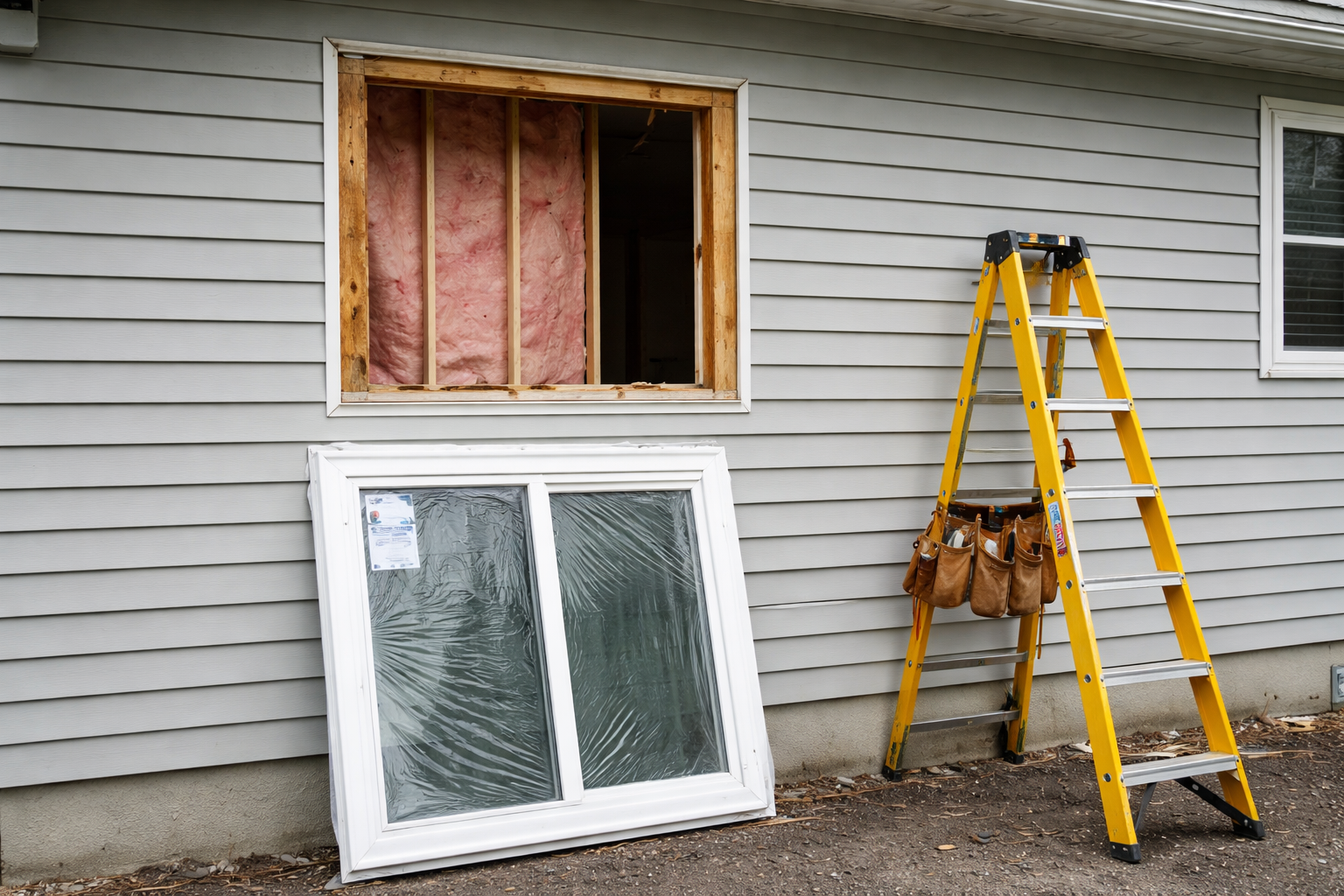
photographic Exterior photograph of a residential home with gray siding one window opening has the old window removed showing exposed wood framing and

WHAT DOES
WINDOW REPLACEMENT COST
ACTUALLY COVER?

When you see a number for cost to replace windows, that figure typically bundles several things together. Understanding what's included helps you compare quotes accurately — because not every company includes the same items in their base price.

Here's what a complete vinyl window replacement quote usually covers:

Window unit — This is the window itself: the frame (the structural border that holds everything together), the glass panes, the hardware (locks, handles, hinges), and the weatherstripping (the flexible seal that keeps air and water out). Vinyl frames are made from PVC, the same material used in plumbing pipes. It doesn't rot, doesn't need painting, and holds up well through freeze-thaw cycles.

Installation labor — This includes removing your old window, preparing the opening, fitting the new window, shimming it so it sits level and square, insulating around the frame, and sealing everything against air and water. Proper installation matters as much as the window quality — a great window installed poorly won't perform well.

Removal and disposal — Old windows have to go somewhere. Most quotes include hauling away the old units, glass, and any debris from the work area. Some companies charge this separately, so it's worth asking.

Trim and finishing — After the window is in, the area around it needs to be finished. On the inside, that usually means installing or reattaching interior trim (the decorative wood or vinyl pieces that frame the window). On the outside, it might include caulking, adding exterior trim caps, or applying J-channel (a piece that covers the gap between siding and window frame). The scope here varies by project.

Cleanup — A professional crew should leave your home clean at the end of each work day. That means no glass shards, no construction debris, and no mess left behind.

A written estimate breaks all of this down line by line so nothing surprises you later. If a quote seems unusually low, check what's actually included — sometimes the "low" price is missing disposal, trim work, or other essentials.

HOW MUCH DOES EACH
WINDOW TYPE COST?

Different window styles have different price points, and understanding why helps you make better decisions. Here's how vinyl window types generally compare on cost:
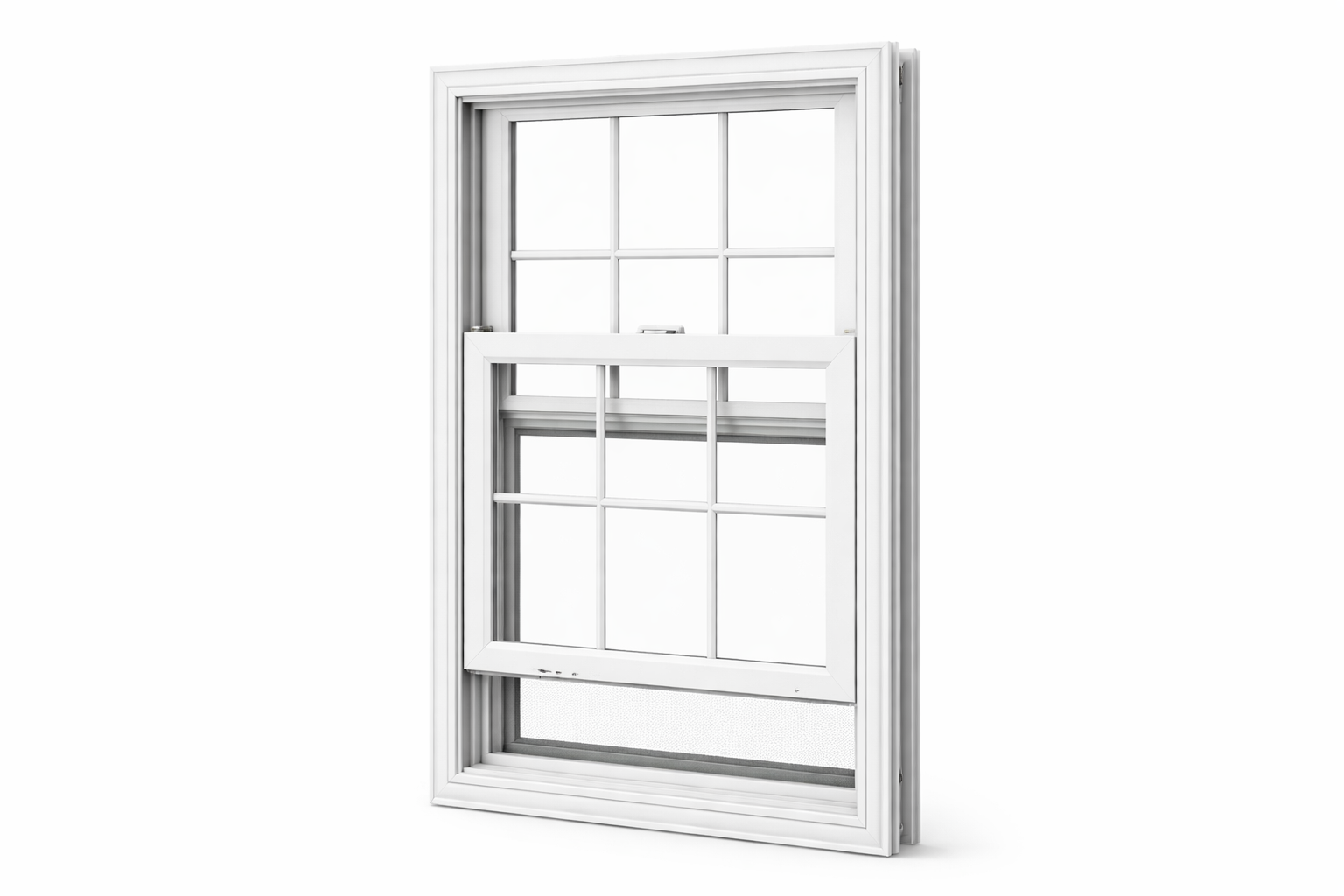
3dmodel double hung vinyl window product shot
$$

Double Hung

The most common style in American homes. Both sashes slide up and down, and most tilt inward for easy cleaning. Mid-range pricing because high volume keeps manufacturing costs down. Best budget-to-value ratio for whole-house replacements. 
Check out our Double Hung Window Type
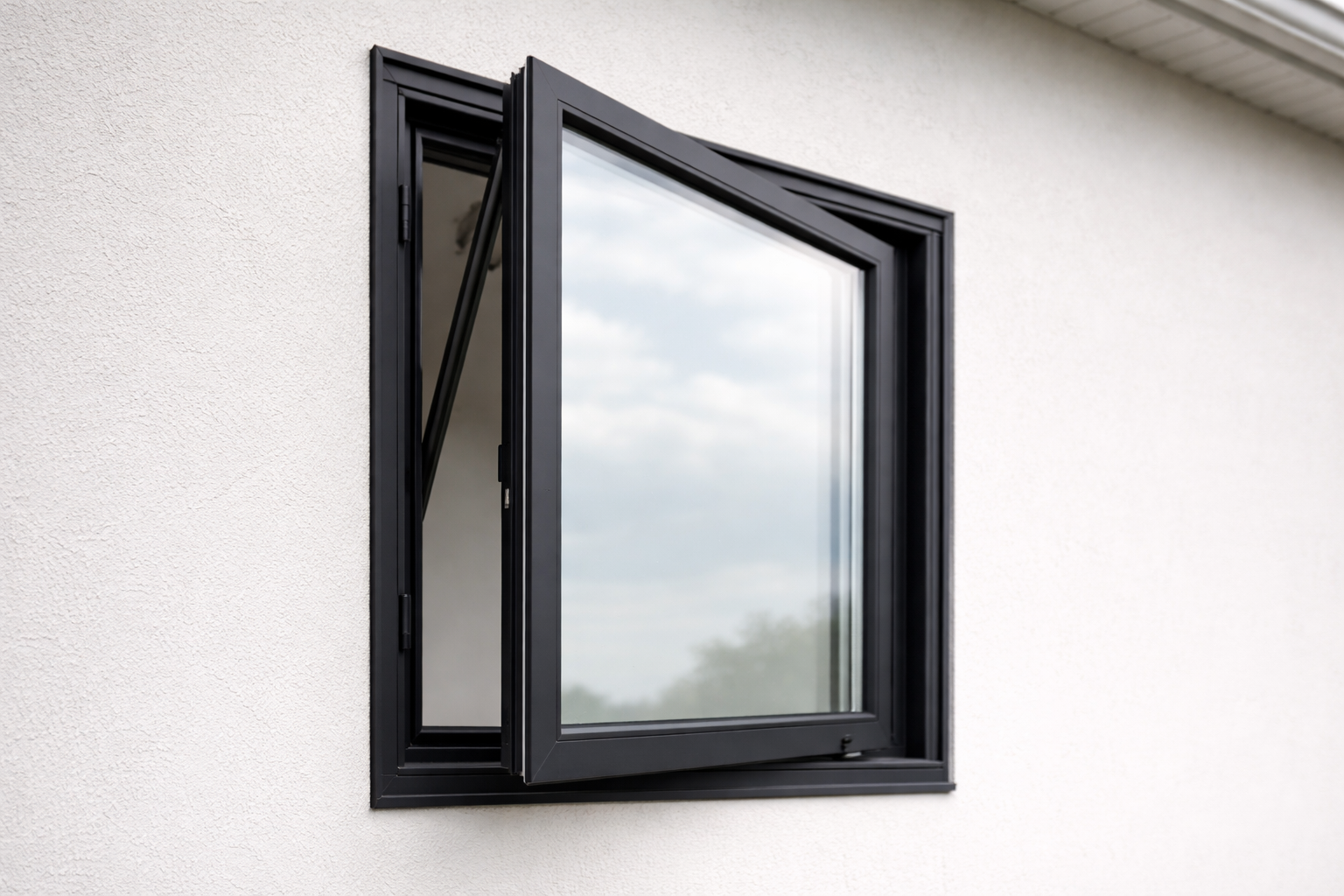
3dmodel Casement  Black framePhotograph of a black vinyl casement window on a white stucco exterior wall window is open outward at a 45 degree angle l-1
$$

Casement

Hinges on one side and cranks open outward, like a door. The sash presses tight against the frame when closed, creating a strong seal against air leaks. Slightly higher than double-hung because of the crank mechanism and hinges. Great for hard-to-reach spots like over a kitchen sink. 
learn about our casement type windows
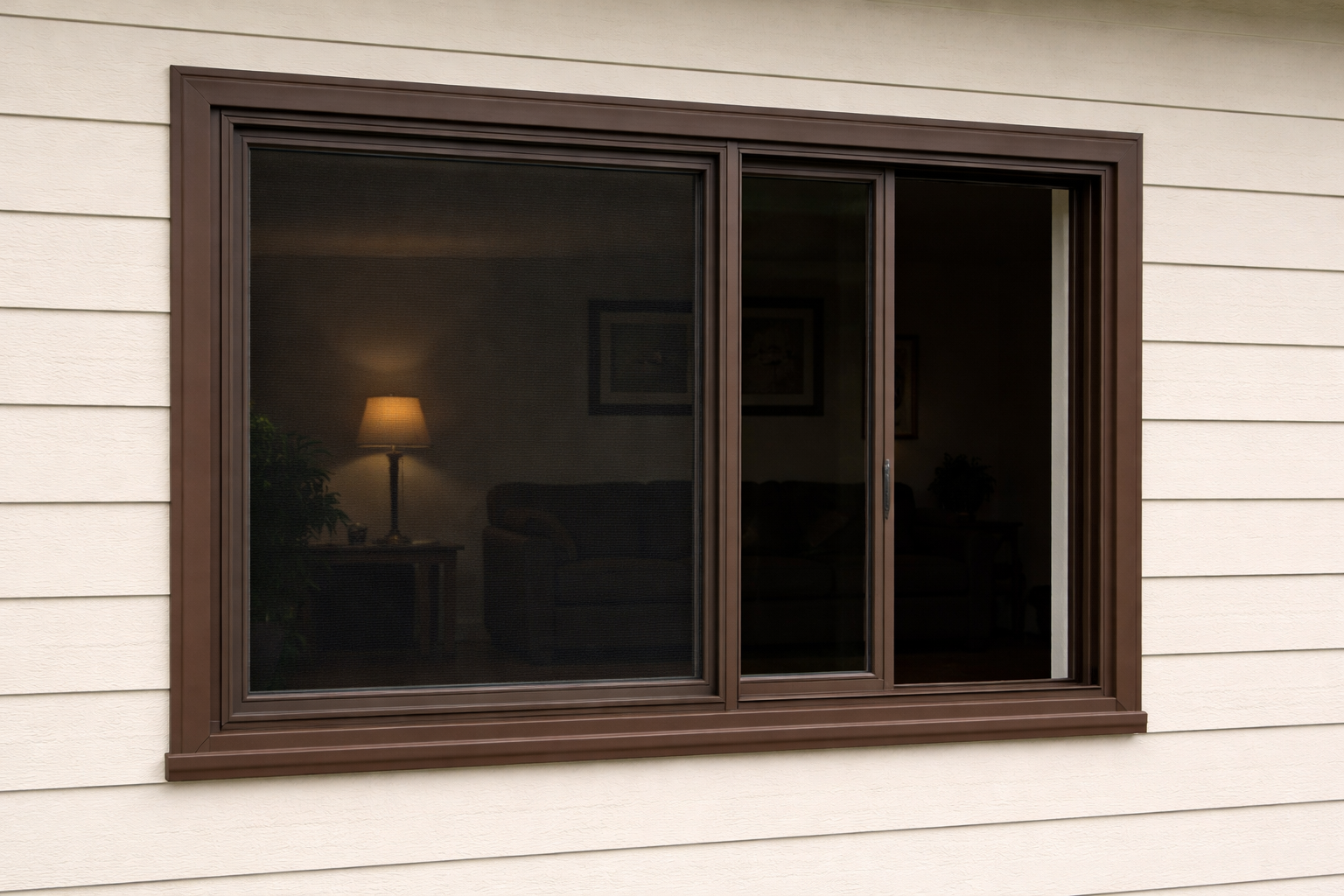
3dmodel Slider  Brown frameExterior photograph of a wide brown vinyl sliding window on a cream colored home right panel is shifted to overlap the left-1
$$

Sliding

One sash stays fixed while the other slides horizontally past it. Simple design, minimal hardware, pricing similar to double-hung. Ideal for wide openings where a double-hung would be too tall and narrow. Common in contemporary homes. 
Discover more vinyl sliding window variations
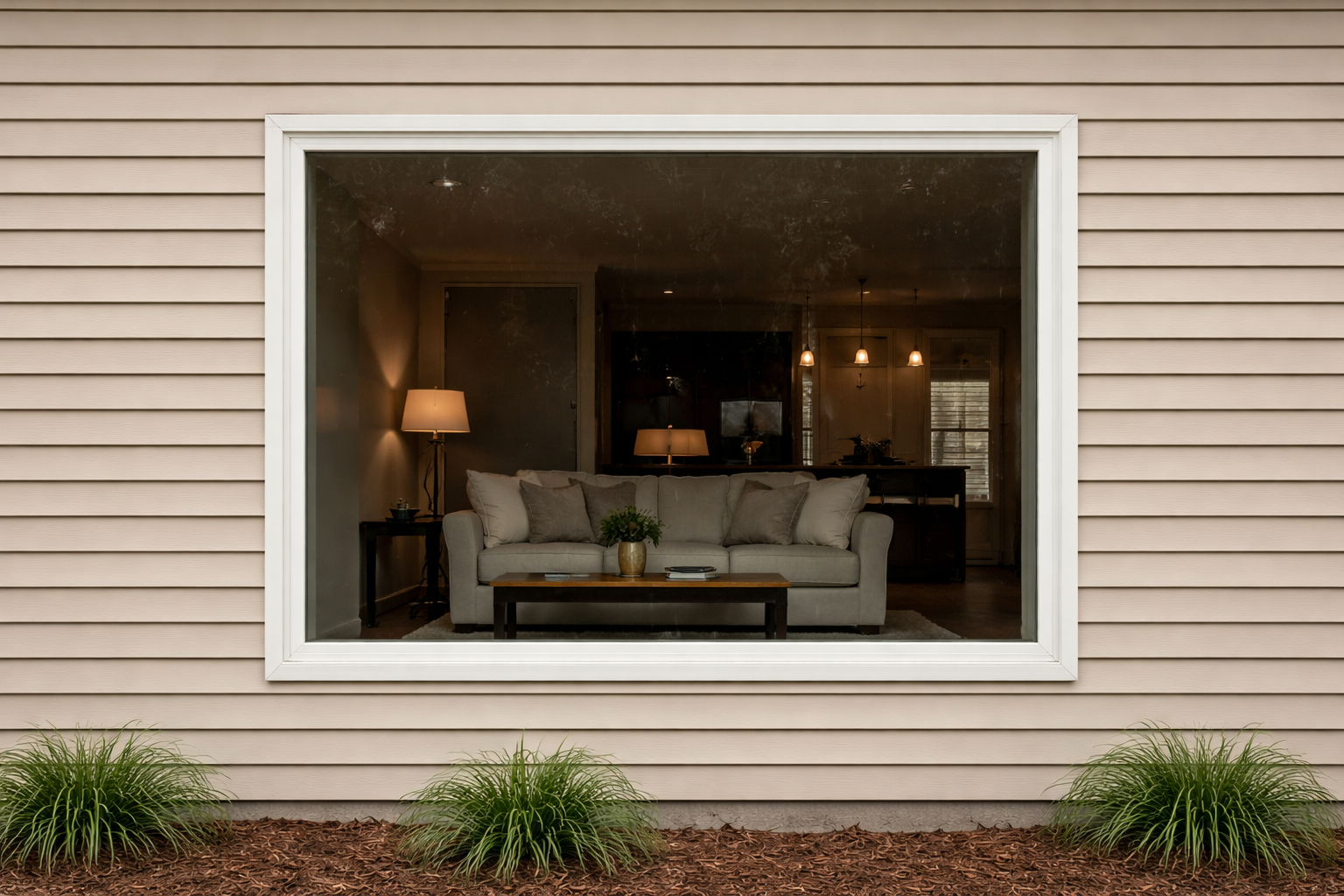
photographic Exterior photograph of a large rectangular picture window on a beige sided home one single unbroken pane of glass with a thin white borde-1
$ to $$

Picture

Fixed — doesn't open. No operating hardware, no moving parts, just a frame and glass. Small units cost less than comparable double-hungs, but large picture windows require heavier glass and beefier frames. Best for maximum light and view without ventilation — often paired with operable windows on either side. 
Browse more information on our Picture window types
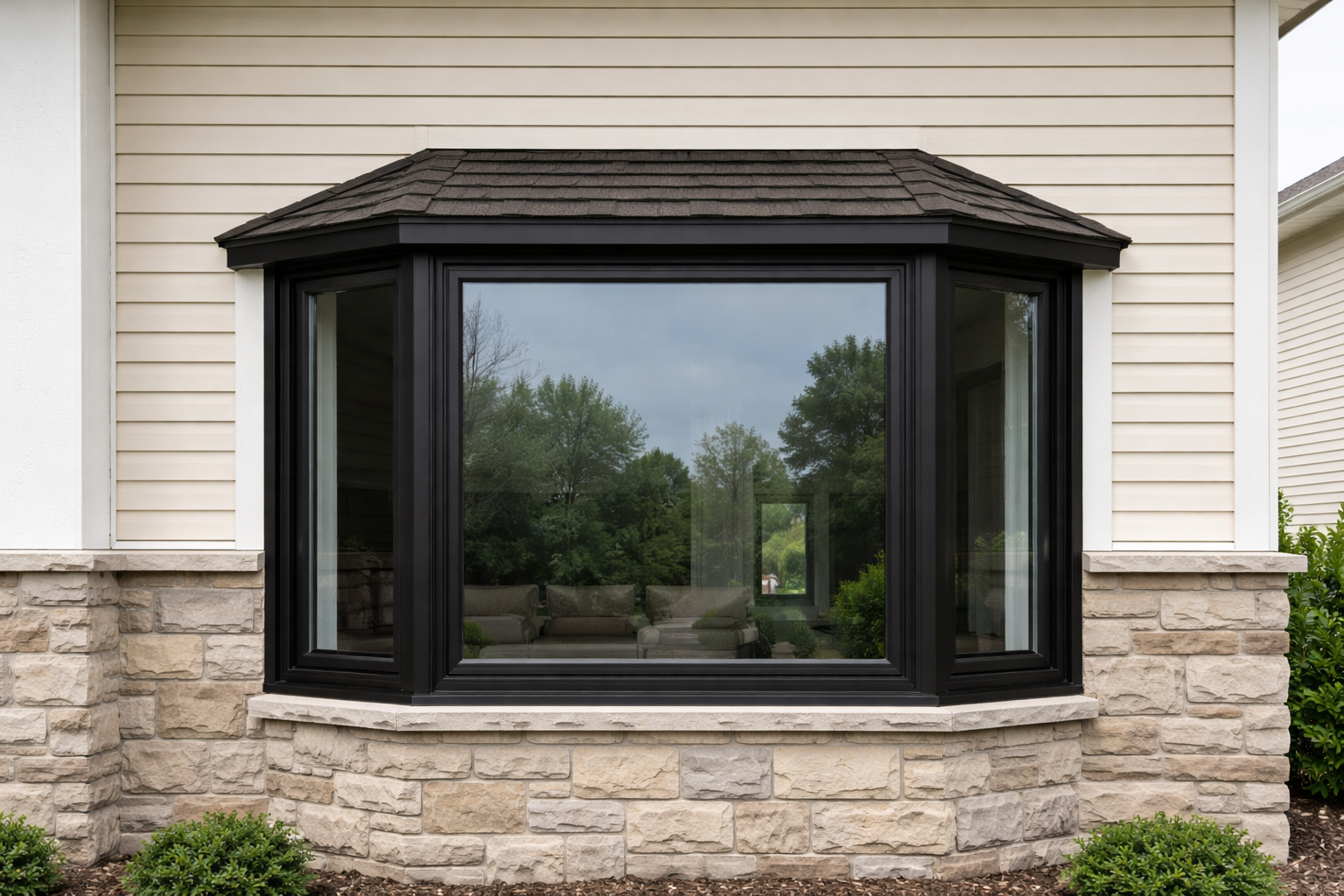
photographic Bay  Bow  Black frameExterior photograph of a black vinyl bay window projecting outward from a twostory home with light stone veneer on t
$$$

Bay Window

Projects outward from your home, creating a small alcove inside. Combines three windows: a large fixed center unit flanked by two operable windows at angles. Higher cost because you're buying three windows plus the frame system, structural support, and complex installation. Replacing an existing bay is straightforward; adding a new one requires significant structural work. 
Check out our bay & bow window types
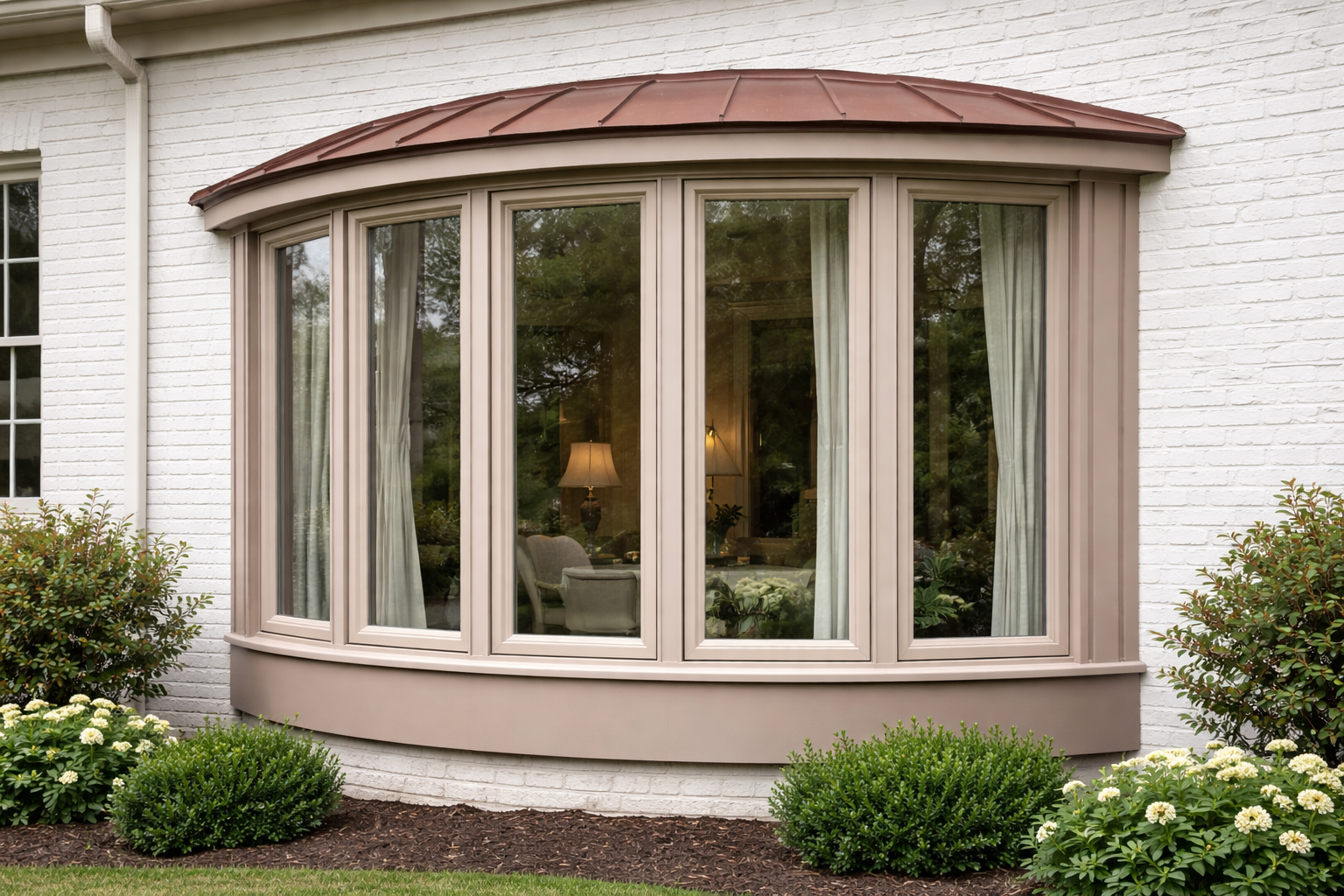
photographic Bow  Clay frameExterior photograph of a clay colored vinyl bow window curving gently outward from a home with white painted brick four eq
$$$

Bow Window

Similar to bays but curves gently outward with four or five window units in an arc. Premium pricing because every unit sits at a precise angle, requiring custom framing and careful installation. Dramatic curb appeal and a lot of interior light, but it's an investment. 
check out our bay & bow window types
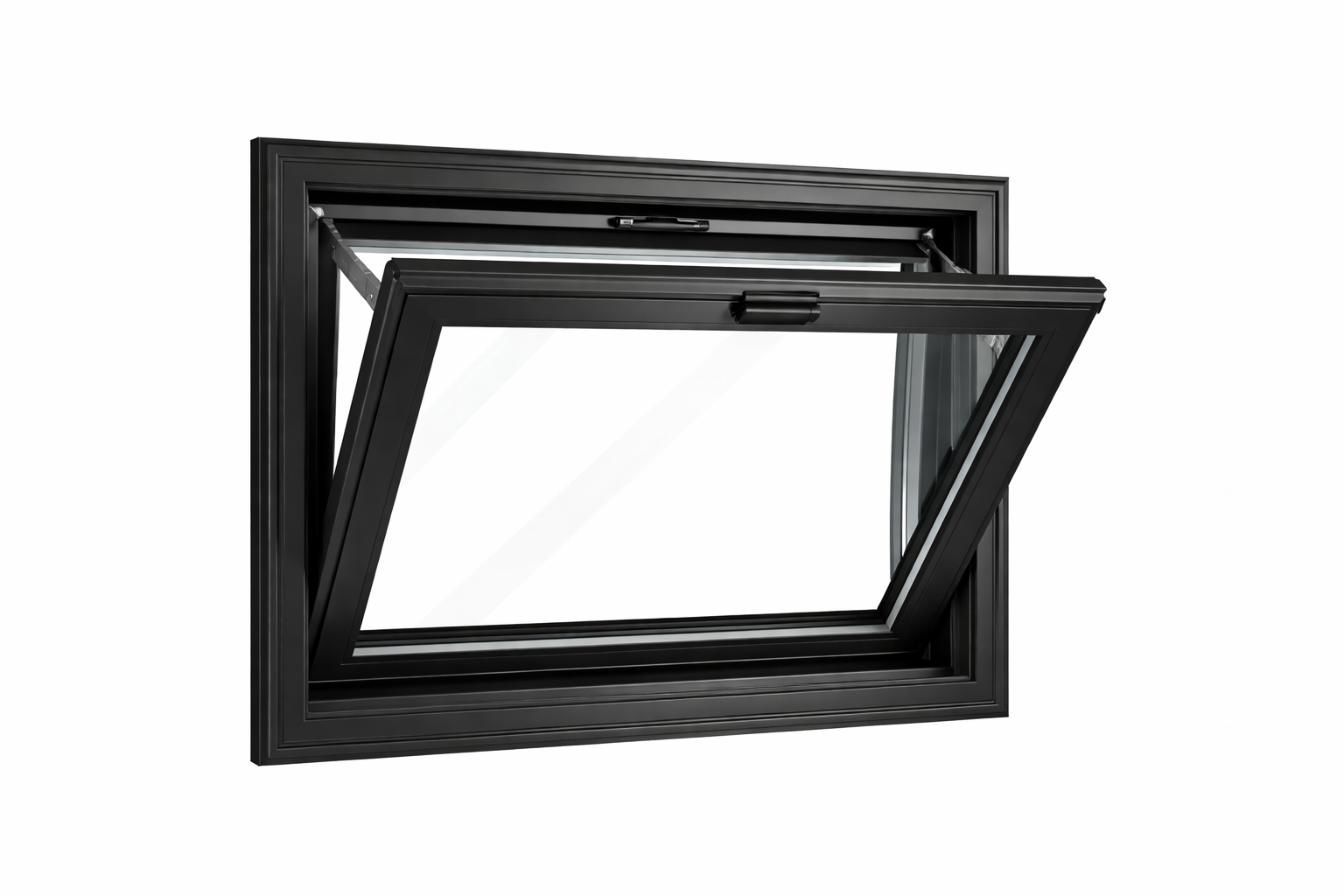
3dmodel Extract whatever image you can get in here and make it into a high resolution 3d product shot of a vinyl black hopper window opening on top-2
$

Hopper

Hoppers hinge at the bottom and tilt inward — common in basements and bathrooms. Garden windows project outward like a mini greenhouse with a fixed front pane, operable side vents, and a glass roof. Pricing depends on size, egress requirements, and features. 
see more hopper & garden window options
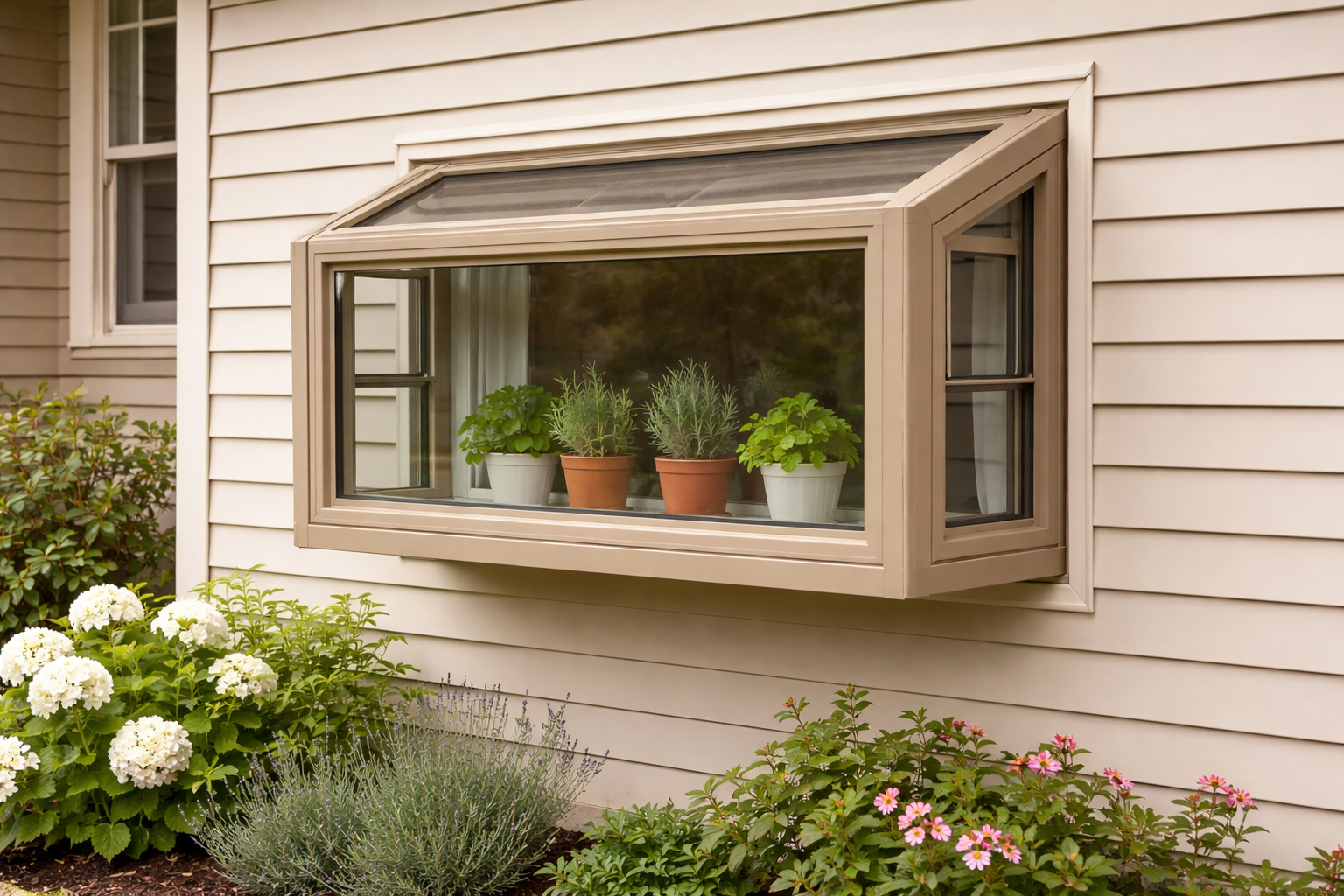
photographic Hopper  Garden  Tan frameExterior photograph of a tan vinyl garden window projecting outward from a kitchen wall on a cream colored home-1
$

Garden

Projects outward from the wall like a small glass shelf. Fixed front pane, two operable side vents, and a sloped glass or solid roof. Popular in kitchens for growing herbs on a sunny ledge. Pricing varies with size and features — generally mid-to-upper range.
Calculate Your Window Cost

WHAT CHANGES
WINDOW REPLACEMENT COST
THE MOST?

How much does window replacement cost? That depends on several factors that can shift the final number significantly. Here's what moves the needle:
01.

Quantity

More windows usually means better per-unit pricing. Replacing 10 or 15 windows at once drops the cost per window compared to replacing just one or two. Ordering materials in bulk helps, and the crew is already set up at your house — adding more windows doesn't multiply labor time the way you might expect. If budget is tight, some homeowners prioritize the worst-performing windows first, then do the rest in a second phase.

02.

Size

Larger openings require more material (bigger frames, more glass) and more labor time to handle and install. A 2-foot by 3-foot bathroom window costs less than a 4-foot by 5-foot living room window, even if they're the same style. Unusual sizes — very tall, very wide, or non-standard proportions — may require custom ordering, which adds lead time and cost compared to stock sizes.

03.

Window Style

Bay and bow windows cost more than standard double-hung or sliding styles because of the multi-unit assembly and structural requirements. Specialty shapes like arches, circles, or geometric windows also run higher because they're custom-made to order.

04.

Glass Options

Standard double-pane glass comes with most vinyl windows. Upgrades that affect cost include triple-pane glass (better insulation, heavier, more expensive), Low-E coatings (reflects heat — cooler in summer, warmer in winter), gas fills like argon or krypton between panes, and noise-reducing laminated glass. Your installer can help you decide which upgrades make sense based on your climate, your home's orientation, and what problems you're trying to solve.

05.

Installation Complexity

Not all windows are equally easy to replace. Second or third-floor work requires ladders, scaffolding, or lift equipment. Tight access behind bushes, decks, or other obstacles takes longer. Interior obstructions like heavy furniture or built-ins need protection. Older homes sometimes have out-of-square openings that require extra shimming and adjustment.

06.

Existing Opening vs. Resizing

Replacing a window in the same-size opening is called a "replacement" or "pocket" installation — the new window fits into the existing frame. This is the most common and most affordable approach. Making an opening larger or smaller is "new construction" or "full-frame" installation — it involves cutting into your wall, modifying framing, and often updating siding and interior drywall. Expect this to cost significantly more, sometimes double or triple a same-size replacement.

07.

Permits

Some municipalities require permits for window replacement, especially if you're changing the size of openings or if egress requirements apply. Permit fees vary by location but typically run $50–$200 per project. Your installer should know what's required in your area and handle the paperwork.

WHAT'S TYPICALLY INCLUDED
VS. WHAT MAY ADD COST

Understanding what's standard helps you compare quotes accurately. Here's how cost to replace windows usually breaks down:


Typically Included

  • Standard vinyl window unit (frame, glass, hardware, weatherstripping)
  • Professional installation by trained crews
  • Removal and disposal of old windows
  • Basic interior trim reinstallation or capping
  • Basic exterior caulking and sealing
  • Daily cleanup and debris removal
  • Manufacturer warranty on the window unit
  • Lifetime Workmanship Warranty on installation (doesn't expire)

May Add Cost

  • Rot or water damage repair → Damaged wood framing around the opening needs to be fixed before the new window goes in.
  • Resizing openings → Making an opening larger or smaller requires cutting studs, adding headers, and patching walls.
  • Specialty shapes → Arches, circles, octagons, and other non-rectangular windows are custom-made.
  • Difficult access → Scaffolding, lifts, or extra safety measures add labor cost.
  • Permit fees → Where required by local code, typically $50–$200 per project.
  • Interior finishing beyond basic trim → New casing, stool, or apron pieces are usually quoted separately.

WINDOWS COST
CALCULATOR

Use this window replacement cost calculator to get a ballpark range for your project. Enter what you know about your windows; select "not sure" for anything you haven't decided yet. The more specifics you provide, the tighter your range will be.

Think of this as a planning tool, not a quote. The calculator doesn't know whether there's rot hiding behind your trim or how easy your windows are to reach — that's what the measurement visit figures out.
Est. Price $0
After You See Your Results:

This is a ballpark estimate only — not a quote, not a contract, and not a guarantee. Your actual vinyl window replacement cost gets confirmed after a measurement visit where we check exact opening sizes, frame conditions, and any access factors. Hidden conditions like rot behind trim, out-of-square openings, or structural issues only show up in person. That's why ranges can shift once we see your home.

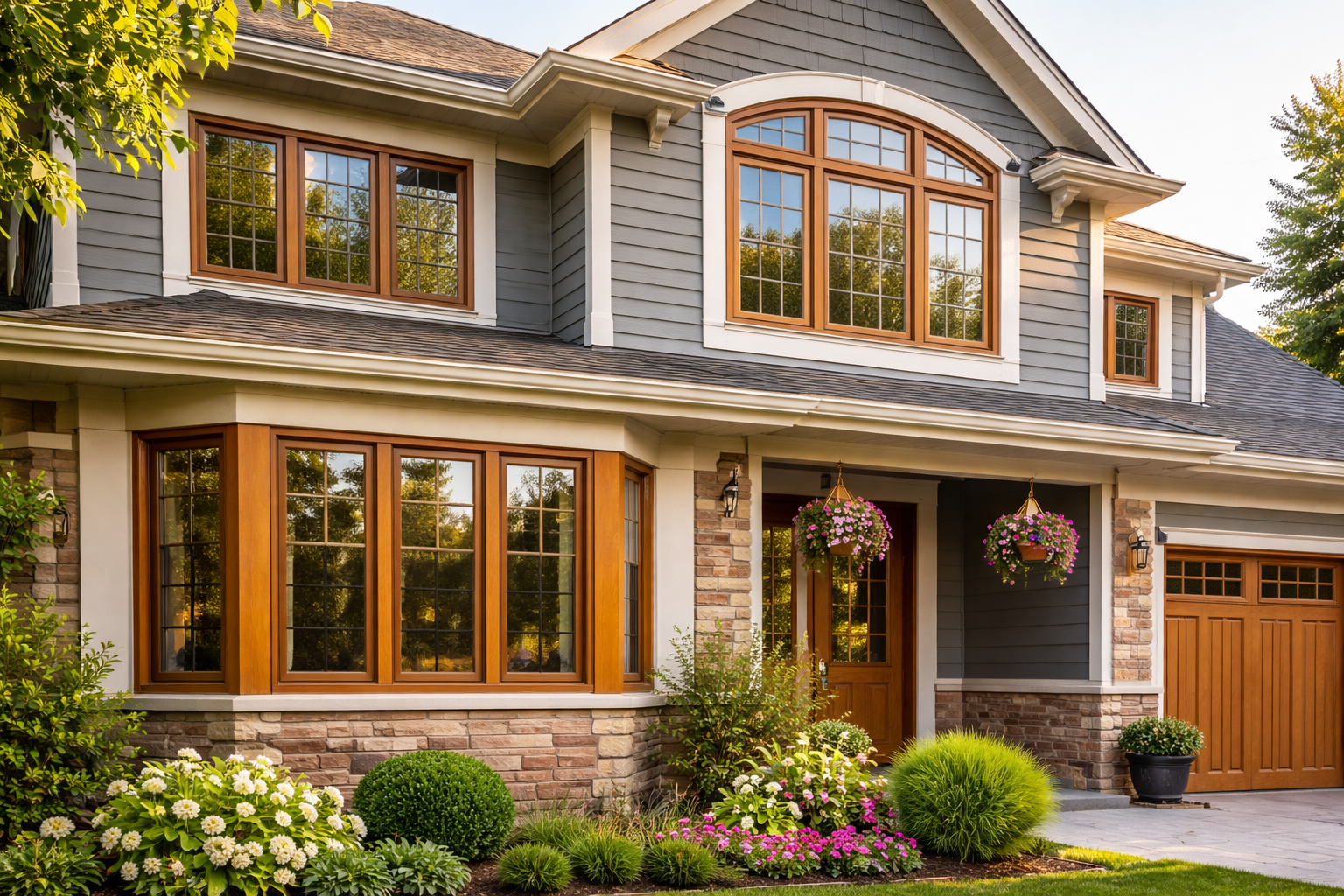
photographic a beautiful sububran house with perfect oak vinyl windows with focus on the windows-1

UNDERSTANDING
YOUR RESULTS

Why Your Range Might Be Wide

The more "not sure" answers you select, the wider your range becomes. That's intentional — we're accounting for variables we can't see remotely.

For example, if you're not sure how many windows you need, the calculator builds in a range that covers possibilities from a few windows to a full-house replacement. If you haven't decided on window styles, it factors in both budget-friendly options and premium styles.

Unknown job conditions also widen ranges. We can't estimate things like water damage, out-of-square openings, or access challenges until someone looks at your home in person. A wider range now means fewer surprises later.

How a Measurement Visit Narrows It Down

During the visit, we measure exact opening sizes — not just the old window, but the framed opening in your wall that the window sits in. We check the condition of frames and surrounding structure, and note any access issues like landscaping, tight spaces, or second-floor work.

We also talk through your priorities — budget, comfort, noise, curb appeal — and recommend options that fit. If you're comparing different window styles or glass packages, we can show you how each affects new windows cost.

After the visit, you get a written estimate with every line item broken down: window units, installation labor, removal, trim, permits if needed, and any repairs. No hidden fees, no vague allowances, no "we'll figure it out later." We've done this for over 10,000 homeowners — we know what to look for and how to quote accurately. That written estimate is what you sign — not the ballpark from the calculator.

schedule an inspection

Ready to Get Your Real Numbers?

Schedule Your Free Inspection

The calculator gives you a starting point for what your window replacement might cost. An inspection gives you real numbers tied to your specific window— its size, condition, and complexity.

Every project includes our Lifetime Workmanship Warranty and Gold Standard Protection Plan — annual inspections, priority scheduling, and coverage that transfers if you sell the home.