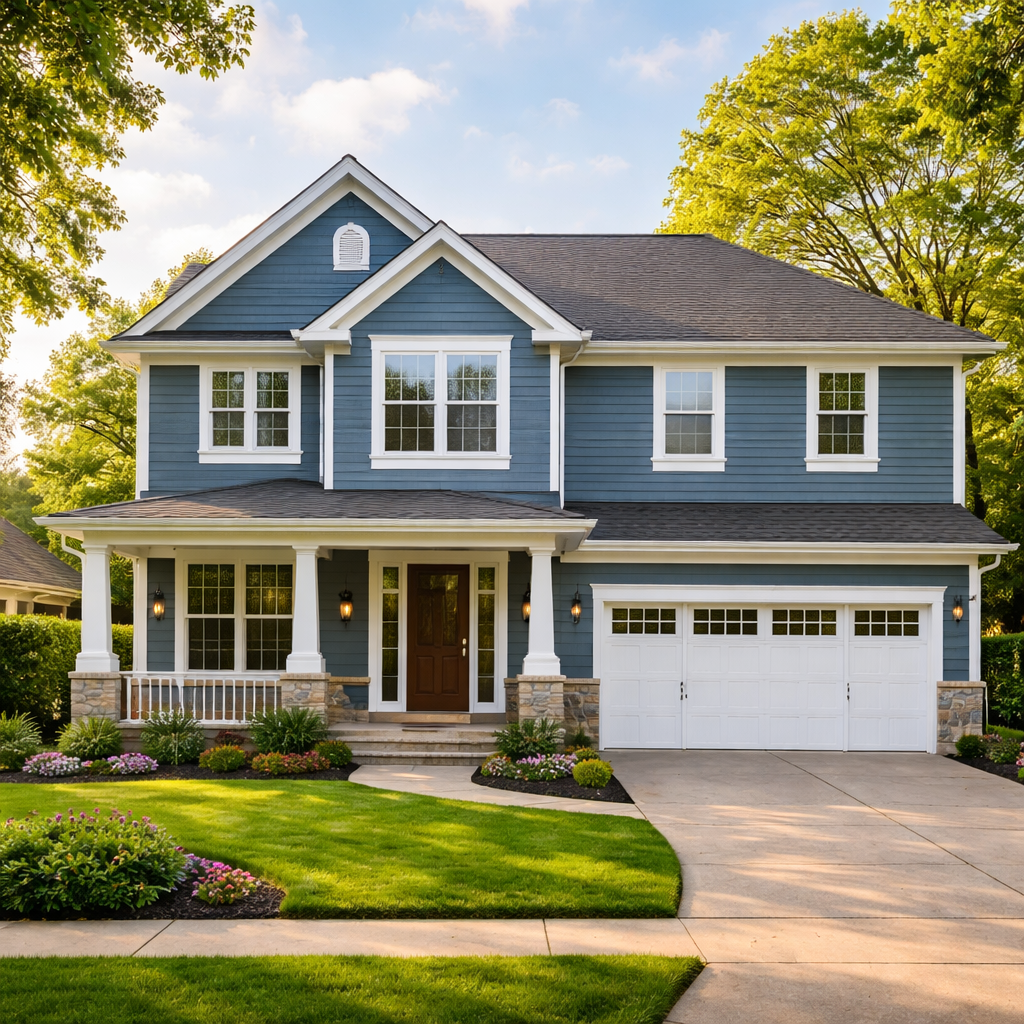
You want real numbers before committing to an estimate—we get it.
Siding replacement cost depends on your home's size, the style you choose, what's hiding under your current siding, and whether you're bundling other work like soffit or gutters.
Most vinyl siding replacement projects fall in the $22,000–$32,000 range
But your actual number could be higher or lower depending on specifics. Use our calculator below for a ballpark estimate, then request a measurement visit for exact pricing.
What Does
Siding Replacement Cost
Actually Cover?
Most people asking "how much does new siding cost" are thinking about the panels—the part you actually see. But your final price covers a lot more than that.
Your cost to replace vinyl siding includes:
- Materials — panels, trim pieces (corners, J-channel, starter strips), and the housewrap that goes underneath to keep moisture out
- Labor — removal of old siding, wall prep, installation, and cleanup
- Disposal — hauling away old materials
Materials usually run about 40-50% of the total. Labor is the bigger piece—usually 50-60% of what you're paying for. That labor portion is where experience matters. Proper installation means panels that don't buckle in summer, seams that stay tight, and trim work that actually keeps water out.
Here's something that trips people up: contractors price based on exterior wall space, not your home's interior square footage. A 1,500 sq ft ranch might have 1,200 sq ft of walls to cover. A 1,500 sq ft two-story? Could be 1,800 sq ft of walls plus gables and dormers. Same interior space, very different siding job.
How Does
Siding Style
Affect Replacement Cost?
Lap Siding (Horizontal)
Traditional horizontal boards that overlap. Lap siding works on almost any home style. It's your baseline—if you're comparing costs, this is where most projects start.
Board & Batten (Vertical)
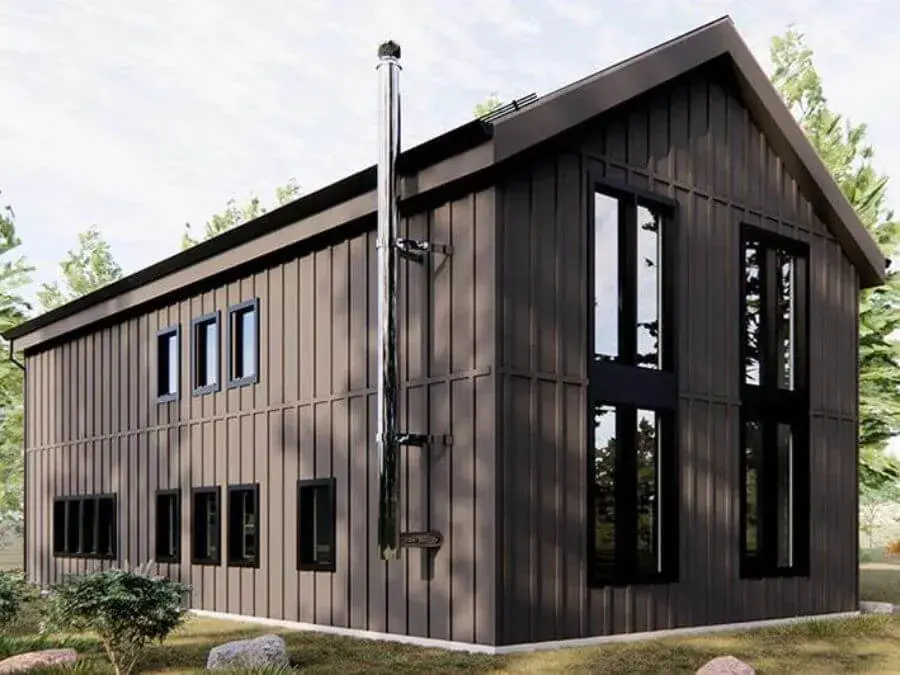
Wide boards with narrow battens covering the seams—runs vertically instead of horizontally. Vertical installation takes a different approach and more precise alignment, so it adds labor time.
Shake Profiles
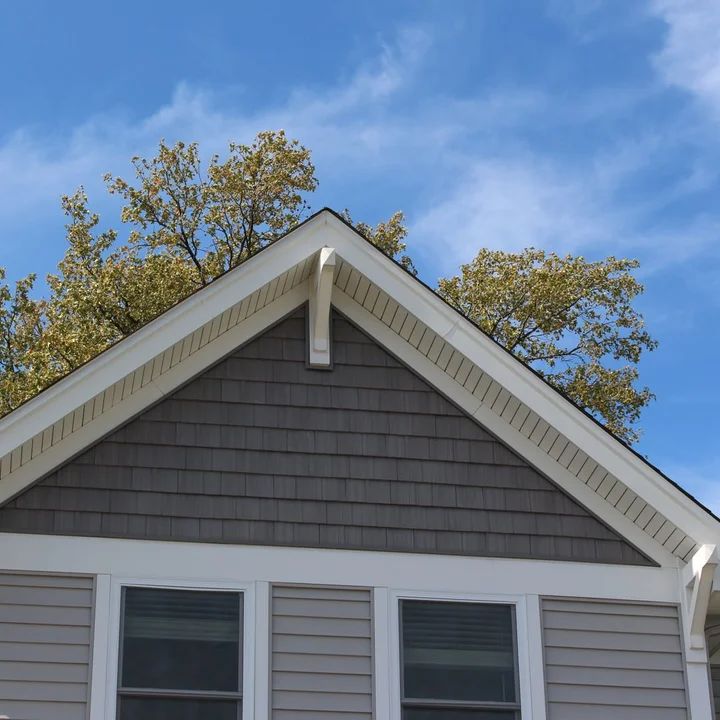
Mimics the texture of wood shakes with staggered edges and deeper shadow lines. Installation takes longer because each piece is smaller—more panels, more fasteners, more time.
Decorative Accents
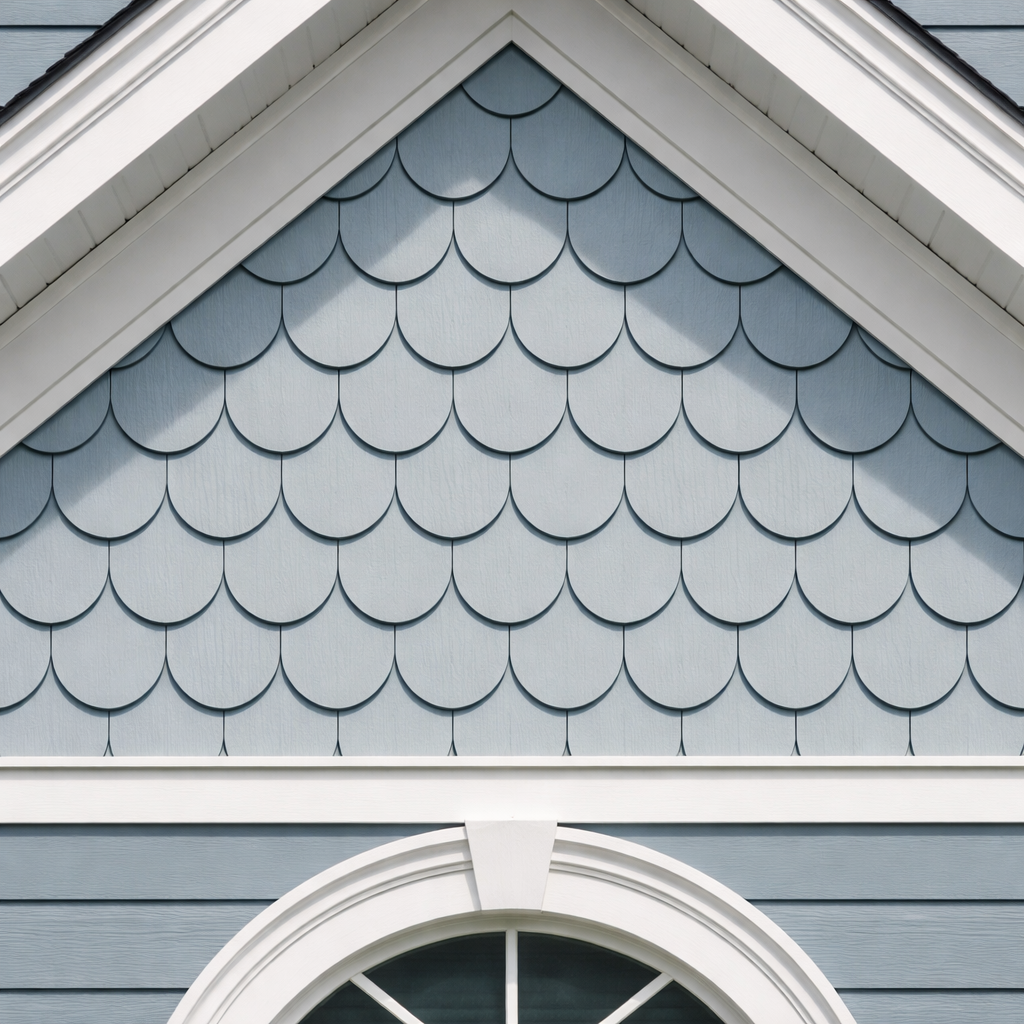
Scallops, half-rounds, or combinations of multiple profiles on different sections. These require the most planning and precise fitting.
What Changes
Siding Replacement Cost
the Most?
Home Size and Wall Coverage
More square footage means more material and more labor hours. But it's not just about how big your house is—it's about how much wall surface needs covering. Tall walls, multiple stories, and complex rooflines all increase coverage area.
Number of Stories
Two-story and three-story homes require scaffolding or lifts. Equipment adds cost, and working at height takes more time than ground-level installation.
Architectural Complexity
Simple rectangular homes with few windows cost less than homes with multiple bump-outs, numerous windows and doors, decorative gables or dormers, and mixed materials. Every corner, angle, and opening requires cutting and fitting.
What's Hiding Behind Your Siding
Stripping old siding is standard. But what's underneath can change your cost significantly—single layer removal is straightforward, but multiple layers, damaged sheathing, or rot and moisture damage must be addressed before new siding goes up.
Add-Ons and Bundled Work
Soffit and fascia, gutters (often makes sense when scaffolding is already up), insulated siding upgrade, and extensive window/door trim work. Bundling work saves on mobilization costs compared to separate projects.
Color and Premium Options
Standard colors cost less than premium or dark shades. Dark colors require specific formulations to handle heat absorption without warping—those engineered options carry higher material costs.
What's Typically Included
vs. What May Add Cost?
A good contractor flags potential add-ons during the measurement visit. Our estimates separate base scope from conditional items—so you know exactly what's included and what might change if we find surprises during removal.
Typically Included
- Removal of existing siding (single layer)
- Housewrap installation
- Standard vinyl panels
- Basic trim package (corners, J-channel)
- Standard color selection
- Window and door trim wrapping
- Daily cleanup and final haul-away
- Permits (where required)
May Add Cost
- Multiple layer removal → Homes with two or three layers of old siding stacked up take longer to strip and cost more in disposal.
- Sheathing repair or replacement → Soft, water-damaged, or delaminated plywood behind the siding must be cut out and replaced before new panels go on.
- Insulated panel upgrade → Foam-backed panels add R-value and rigidity for roughly 20% more in material cost, no extra labor.
- Extensive custom trim work → Homes with lots of windows, arched openings, or mixed-material transitions need more cutting, fitting, and trim pieces.
- Premium or dark color options → Dark shades use engineered resins with heat-deflection technology to prevent warping, which costs more per square than standard colors.
- Soffit and fascia replacement → The trim under your roof overhang — easiest and cheapest to replace while scaffolding is already up for siding.
- Gutter replacement → Gutters come down for siding anyway, so replacing old or sagging ones now avoids paying for separate mobilization later.
- Structural repairs behind siding → Framing damage from moisture, insects, or settling that goes beyond sheathing and requires structural reinforcement.
Siding Cost
Calculator
Keep in mind: This gives you a ballpark, not a final price. We confirm actual cost after measuring your home and checking what's behind your current siding. Things we can't see from a calculator—like sheathing damage or multiple old layers—can change the final number.
How Do I Understand My
Calculator Results?
Why You're Seeing a Range
The calculator can't see your walls. It doesn't know if there's rot underneath, how many layers of old siding are there, or exactly how many windows and corners your home has.
Ranges account for that uncertainty. The low end assumes straightforward conditions—single layer removal, no sheathing damage, standard complexity. The high end builds in contingency for common complications.
Getting to a Real Number
An in-home measurement visit takes 60-90 minutes. We measure every wall section, count windows and doors, check current siding condition, and discuss your goals. You'll get a written estimate—not a verbal ballpark—that breaks down materials, labor, and any conditional items.
No obligation, no pressure. We'd rather give you straight information upfront than chase a project that doesn't fit.
Related Resources
Siding replacement process
Read more about our intricate siding installation process
Finance your siding?
Get the best rates with our in-house financing
Siding Styles & Options
Various selection to choose from based on what your aesthetic needs are
Our Vinyl Siding
A premium vinyl siding collection only for our customers
Ready to Get Your Real Numbers?
Schedule Your Free Inspection
The calculator gives you a starting point for what your siding replacement might cost. An inspection gives you real numbers tied to your specific siding— its size, condition, and complexity.
Every project includes our Lifetime Workmanship Warranty and Gold Standard Protection Plan — annual inspections, priority scheduling, and coverage that transfers if you sell the home.