How do flat roof materials compare to asphalt
and metal?
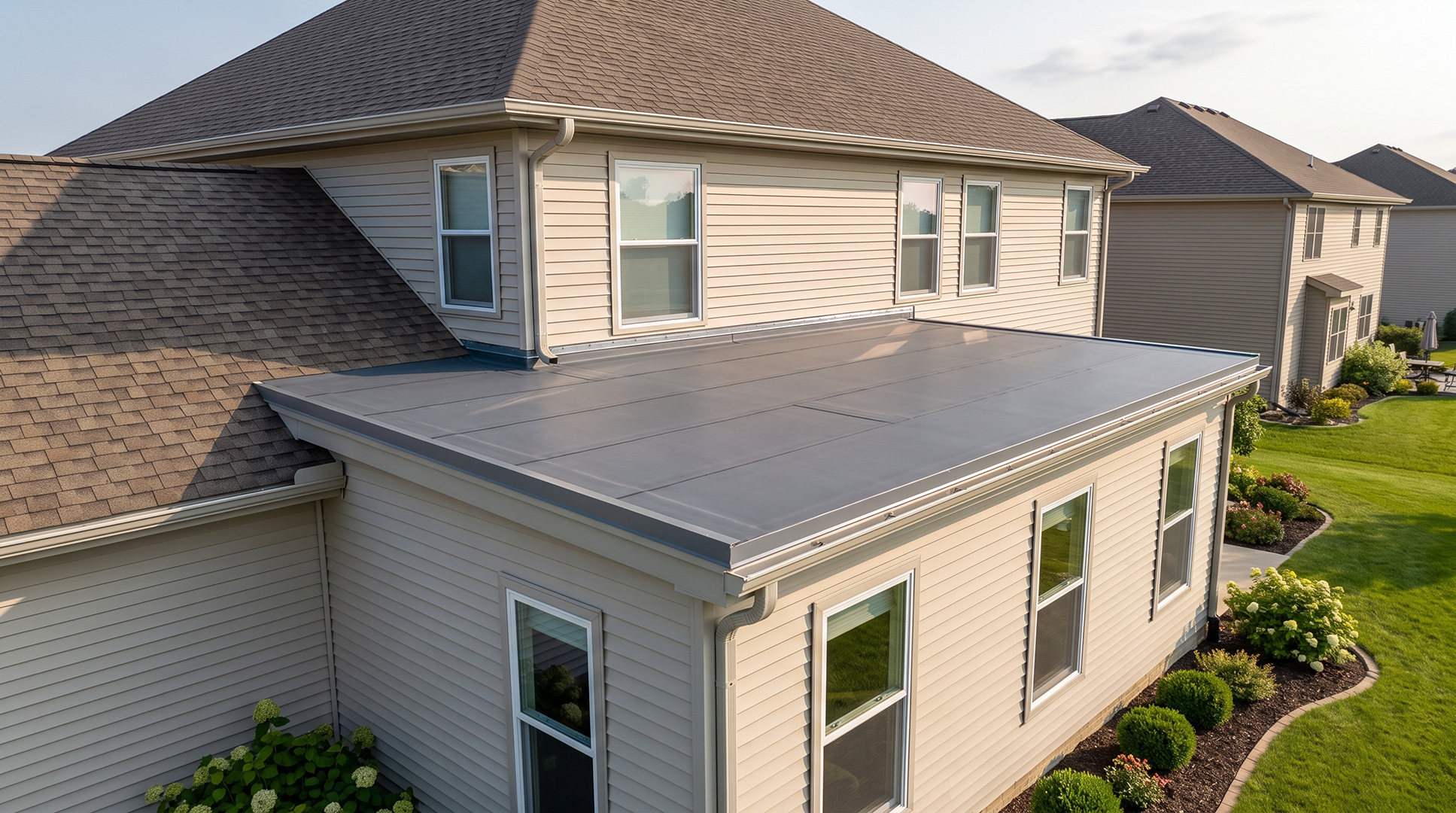
Flat roof membrane materials
Best for
Low-slope sections where pitch won't move water fast enough for shingles.
Technical requirement
Applied to sections with minimal pitch; creates continuous waterproof layer across full surface.
Drainage method: Planned slopes to edge drains or scuppers; membranes handle standing water better than shingled systems.
Expected performance: EPDM and TPO typically 15-25 years on residential applications when installed correctly.
Asphalt shingle roofing
Best for: Standard pitched sections on main roof areas.
Technical requirement: Needs adequate slope (minimum 2:12 pitch, though 4:12+ performs better); relies on shingle overlap and gravity to shed water.
Not appropriate for
Low-slope sections where water moves slowly or pools—shingles will leak at nail penetrations and seams when water sits.
Metal roofing
Best for
Pitched sections; some metal systems handle lower slopes than shingles but still need pitch for drainage.
Technical note
Standing seam metal can work on slightly lower slopes than shingles but isn't typically used on true flat/low-slope residential sections. Most metal residential applications target main roof areas.
Where do flat roofs show up on homes?
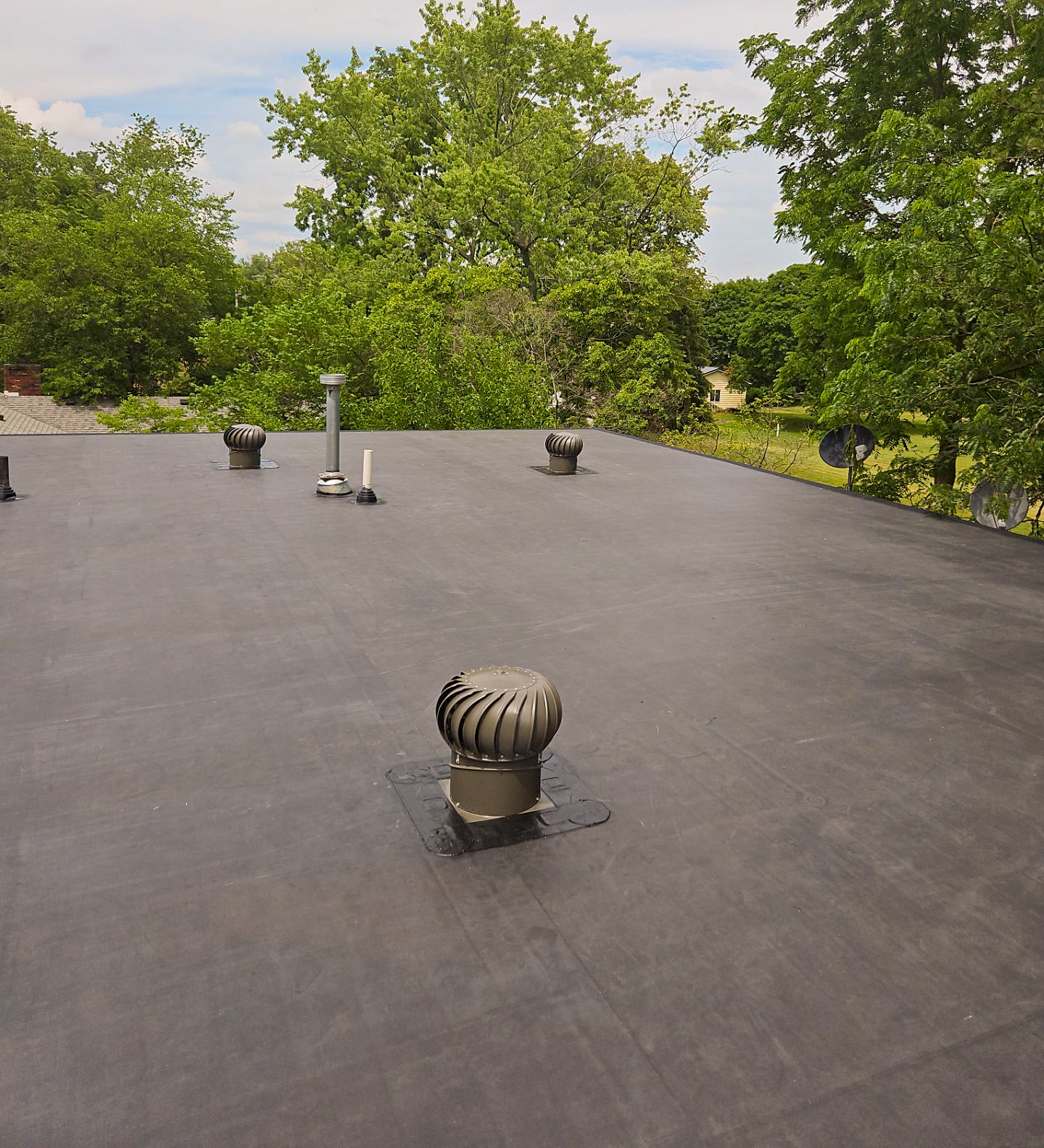
Porches & covered entries
Front porches and covered entry areas often have low slope roof materials because the structure sits lower than the main roof. These sections need membrane coverage that handles slower drainage and occasional ponding. EPDM and TPO both work well here.
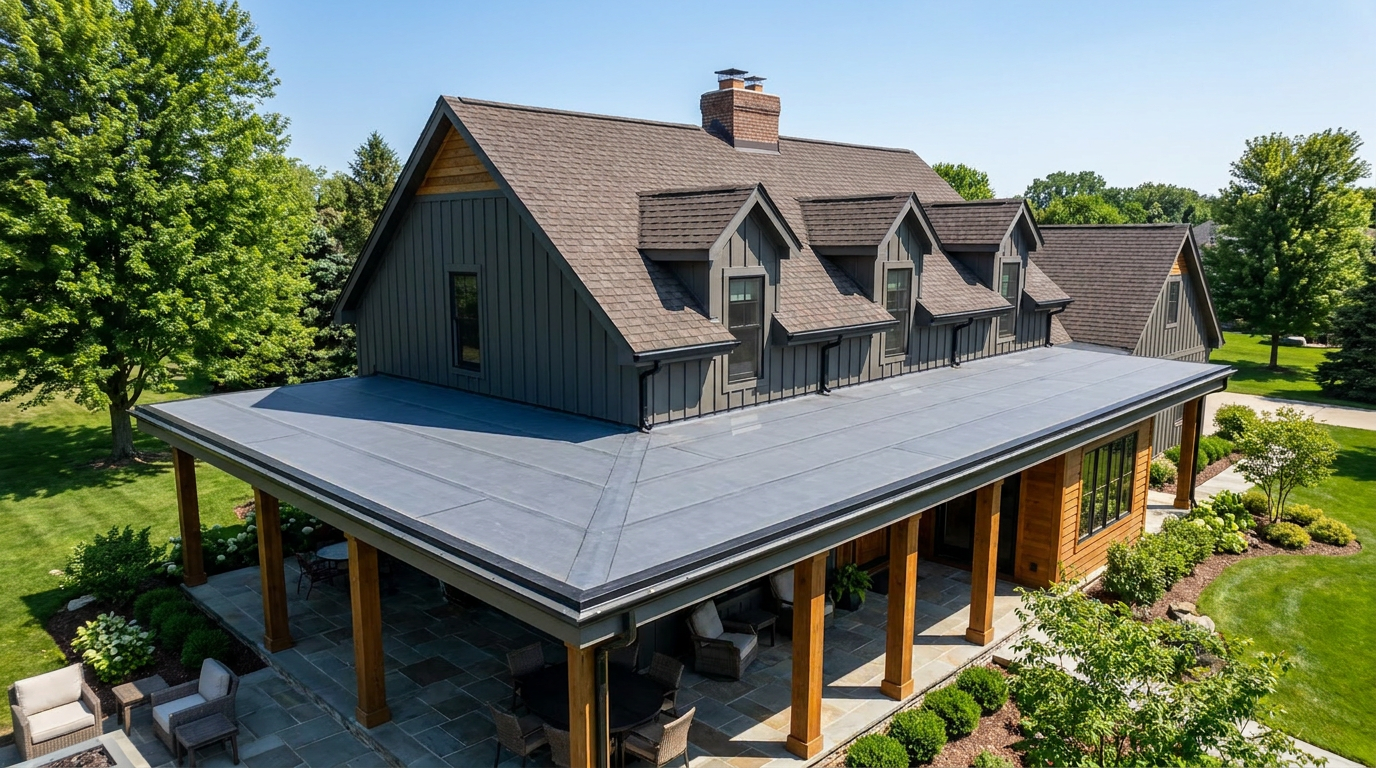
Garage & addition roofs
Attached garages and home additions frequently get built with flatter pitch than the main house. Flat roof options for porches and additions include single-ply membranes that cover the full surface and seal at transitions. These areas handle water exposure differently than sloped sections above.
Low-slope sections on modern designs
Contemporary and split-level homes sometimes incorporate residential low-slope roofing as an architectural feature. These sections need membrane systems that perform through freeze-thaw cycles and temperature swings without relying on steep pitch for drainage.
What flat roof membrane types do we install?
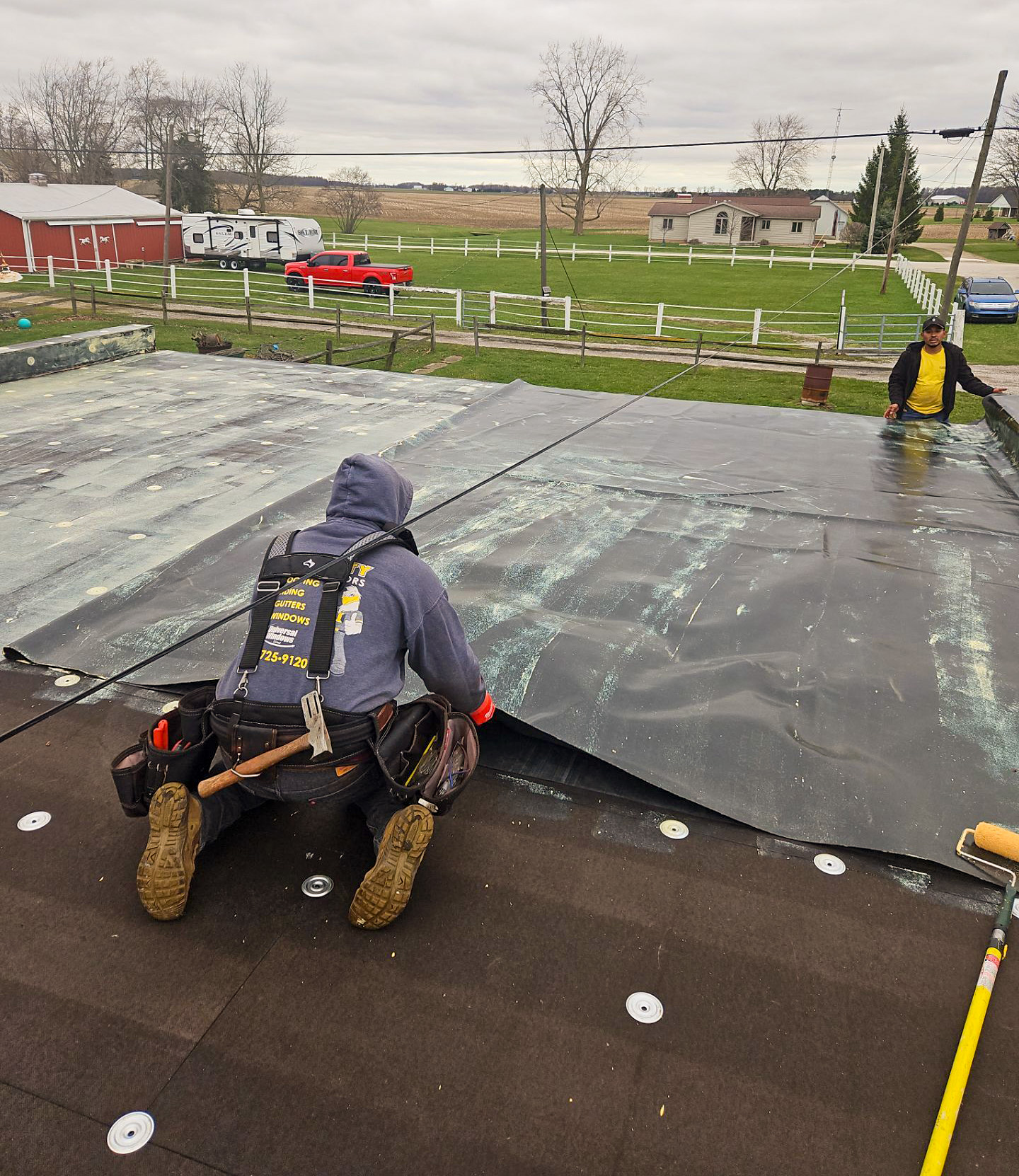
EPDM flat roof for homes
EPDM flat roof for homes means rubber-like membrane material. Black surface, flexible construction, handles temperature movement. Seams get adhesive-bonded or mechanically fastened. Common on residential low-slope sections for over 40 years.
Technical composition: Synthetic rubber (ethylene propylene diene monomer). Comes in rolls that get laid across roof decking with seams sealed to create continuous coverage.
Where it works: Porches, garage roofs, additions where dark surface color fits the design. Handles freeze-thaw cycles in Michigan and Ohio climates.
TPO flat roof materials
TPO flat roof materials feature light-colored membrane (usually white or light gray). Single-ply thermoplastic that reflects sun rather than absorbing heat. Seams get heat-welded together for watertight connections.
Technical composition: Thermoplastic polyolefin. Factory-manufactured in consistent thickness, typically 45-80 mils for residential applications.
Where it works
Any flat roof membrane options where energy efficiency matters. Light color reduces heat absorption on sections with living space below. Works on porches, additions, garage roofs.
Modified bitumen flat roof
Modified bitumen flat roof uses asphalt-based rolls designed specifically for low-slope applications. Applied with heat or adhesive. Multiple layers create redundancy. Asphalt composition means dark surface similar to standard shingles.
Technical composition: Asphalt modified with rubber or plastic polymers for flexibility. Reinforced with fiberglass or polyester mat.
Where it works: Budget-conscious projects on garage roofs or additions. Shorter expected lifespan than EPDM or TPO but lower material cost. Membrane materials typically provide longer service life than modified bitumen systems.