Door types we install
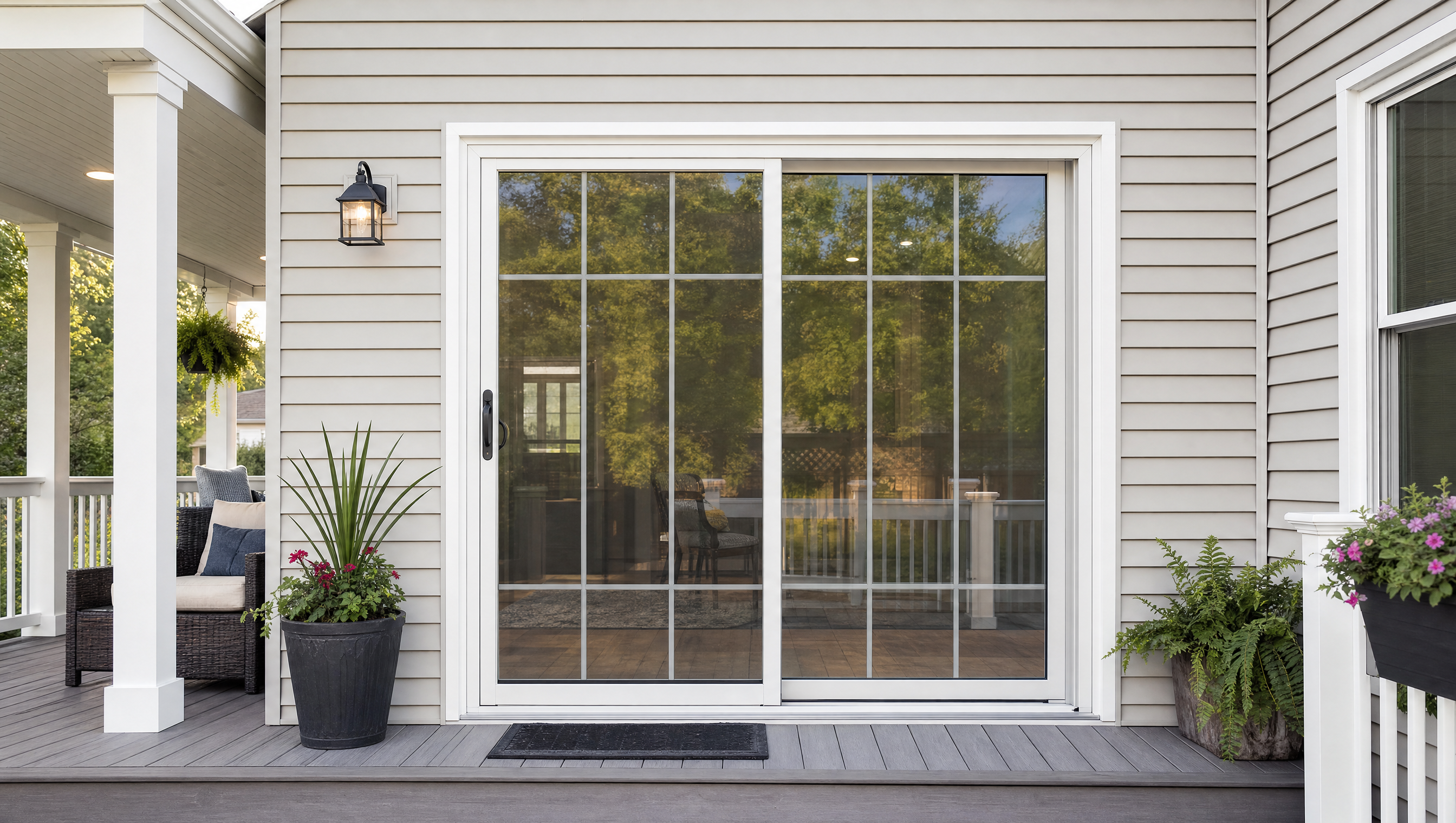
Sliding patio doors
Large glass panels that slide horizontally on rollers. These doors connect your living space to a deck, patio, or backyard. The appeal is obvious—lots of glass, clear views, and easy access when you're carrying things in and out.
The way sliding patio doors work creates specific weak points. Panels glide on rollers inside a track. If the rollers wear out or the track gets dirty, the door drags and the weatherstripping doesn't compress evenly. That's where air leaks and drafts start. The panel that moves needs weatherstripping along all four edges, and it only seals properly when it closes completely and locks into place.
Glass performance matters more here than on entry doors because you're looking at a much larger area. Solar heat gain affects cooling costs in summer. Low‑e glass coatings and gas fills between panes help manage that heat without blocking your view.
Where sliding patio doors work
- Back decks and patios
- Walkout basements
- Sunrooms connecting to outdoor spaces
Performance focus
- Roller quality: Worn rollers make doors hard to operate and prevent proper sealing
- Track maintenance: Keep tracks clean so panels close completely
- Weatherstripping: Replace when compressed or torn
- Glass performance: SHGC (solar heat gain coefficient) matters for sun exposure

Storm doors
A protective layer installed in front of your entry door. Storm doors typically have interchangeable glass and screen panels so you can swap between them by season. Glass in winter adds an extra insulation layer and protects your entry; screens in spring/fall let you ventilate without bugs.
If your entry gets several hours of direct sun each day, a full‑glass storm can trap heat between the two doors. Low‑e glass on the storm reflects some of that heat away, reducing the risk—always check manufacturer guidance for high‑sun exposures.
Where storm doors work
- Entry doors needing extra weather protection
- Homes with harsh winters or strong storms
- Seasonal ventilation without replacing the main door
Performance considerations
- Heat trapping: Full glass + direct sun can damage finishes; use low‑e glass
- Ventilation: Interchangeable panels let you control airflow
- Protection: Adds a barrier against weather and reduces wear on the main door
Door types & styles options
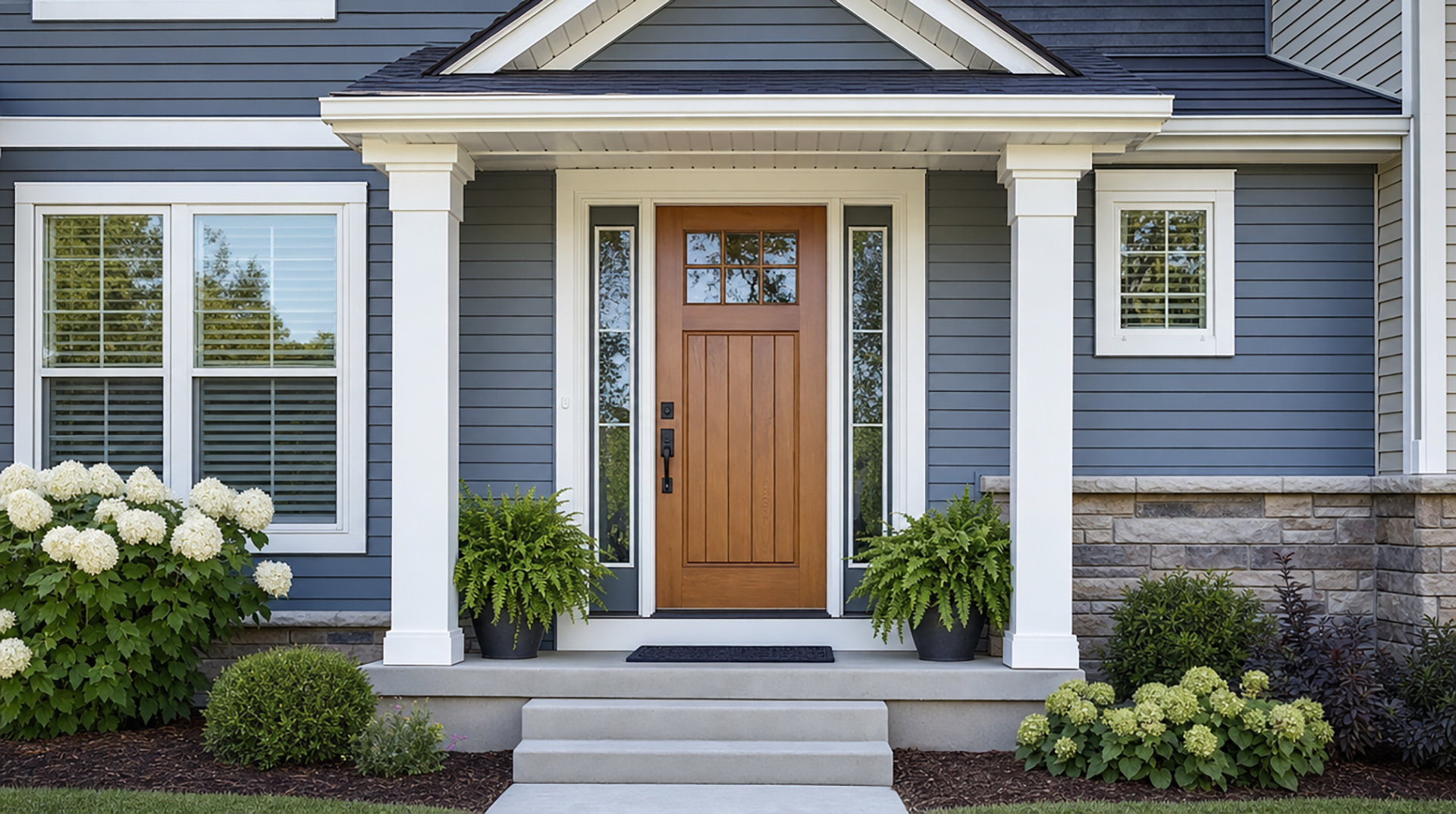
Glass configurations
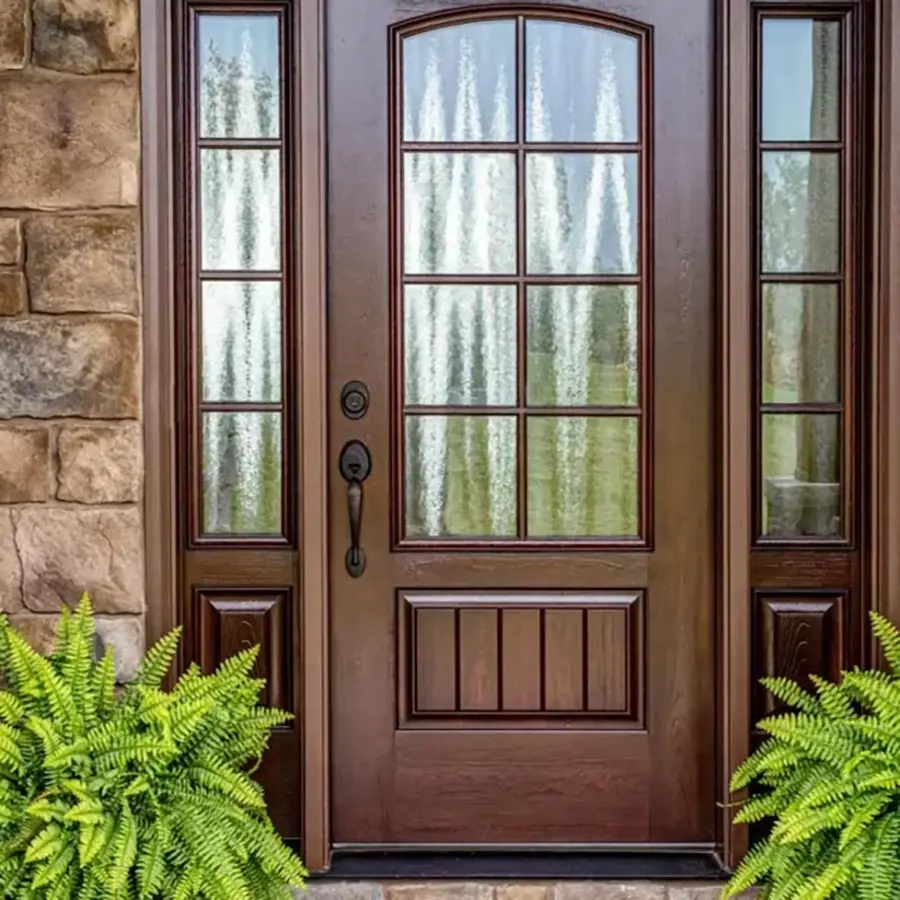
Clear glass maximizes daylight (higher VT). Privacy glass obscures views while passing light. Decorative glass adds visual interest. More glass can raise U‑factor/SHGC; choose high‑performance options if energy is a priority.
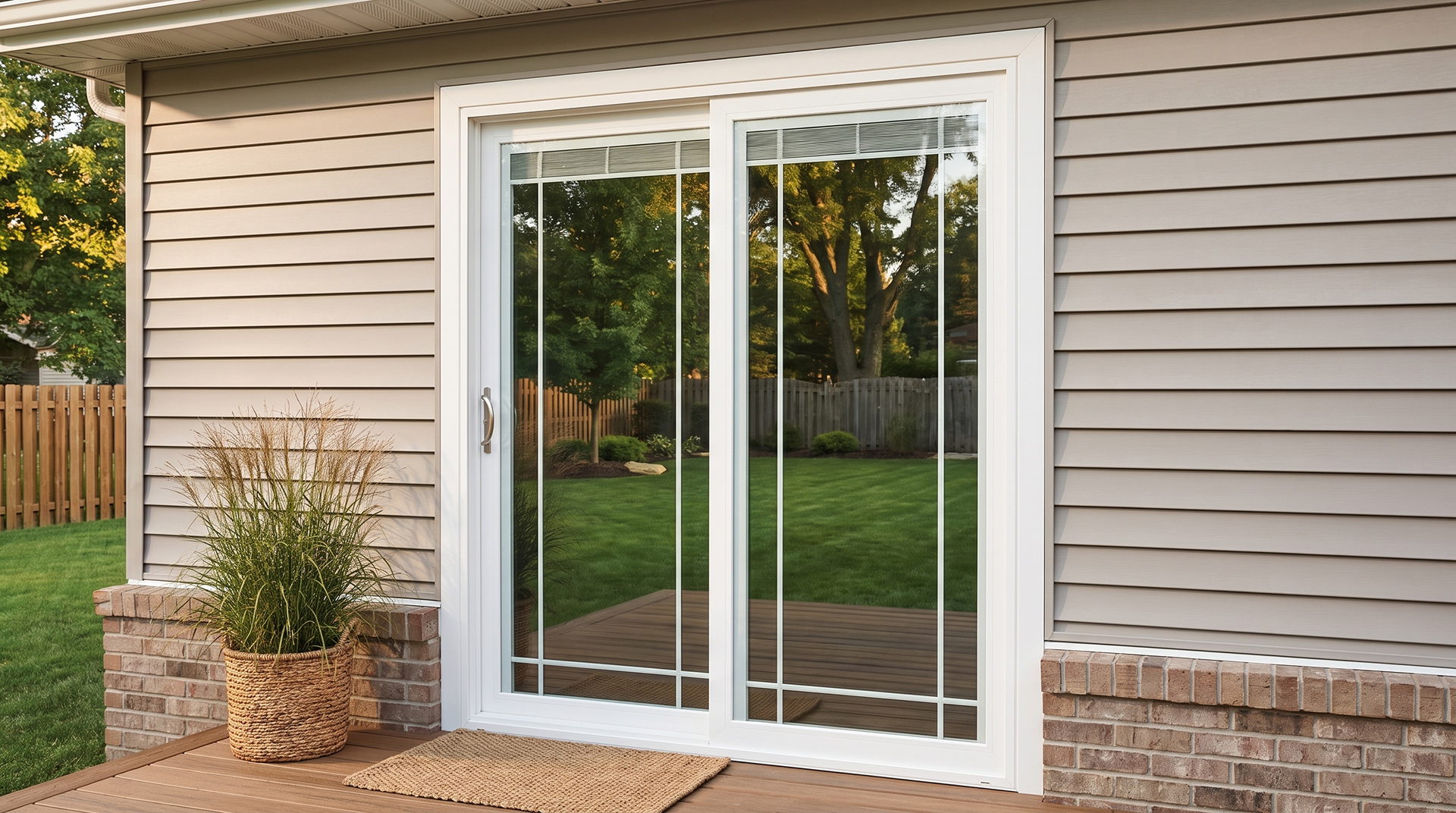
Sidelites & transoms
Sidelites and transoms bring more light without enlarging the door. Ensure continuous weathersealing at joints to prevent leaks.
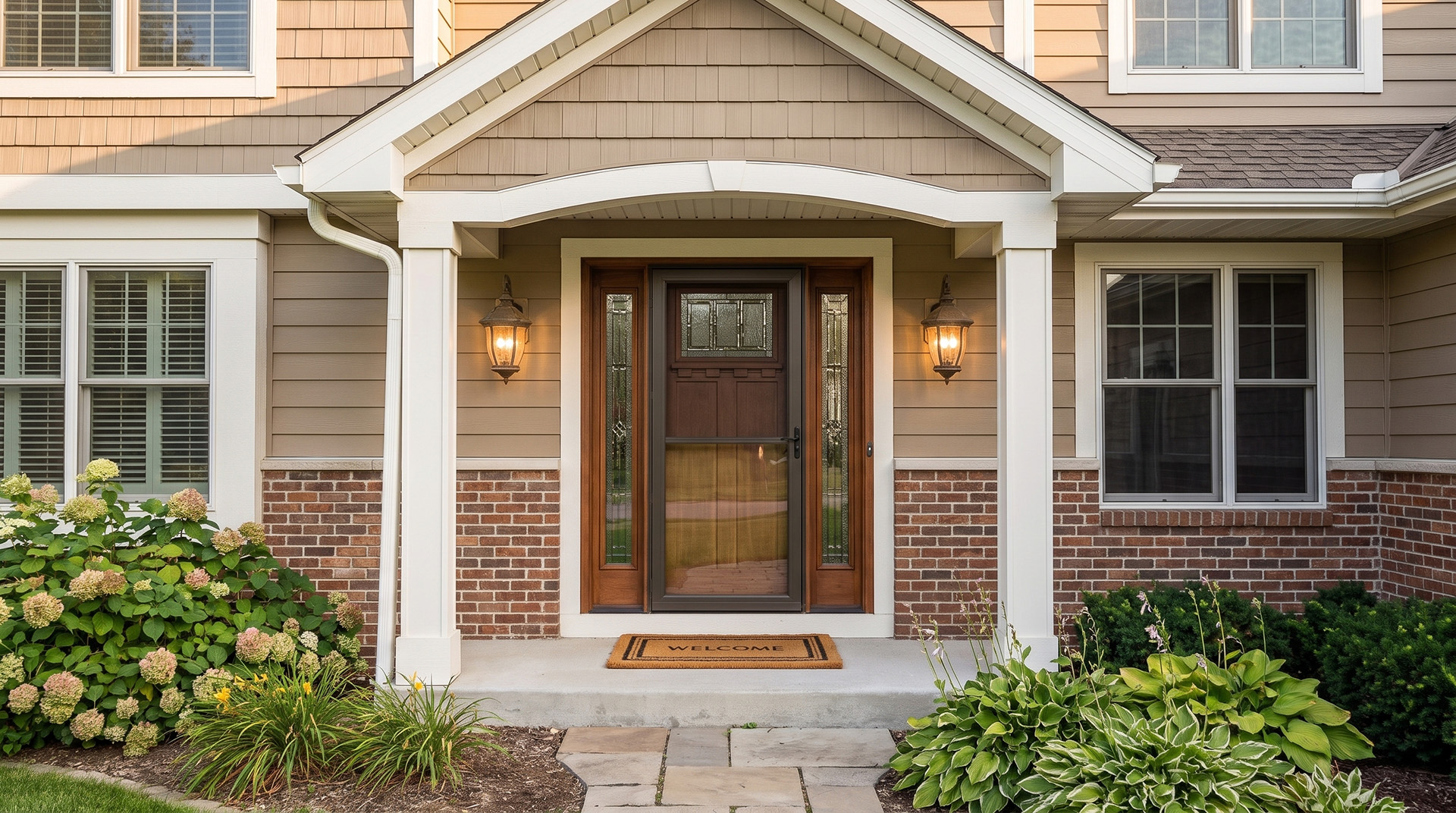
Hardware
Handlesets, deadbolts, and multi‑point locks affect both look and performance. Multi‑point locks engage at top/middle/bottom to improve seal and security.
Finishes
Factory‑painted/stained doors arrive ready to install and typically last longer than field finishes. Primed doors need painting after install; plan periodic maintenance based on exposure.