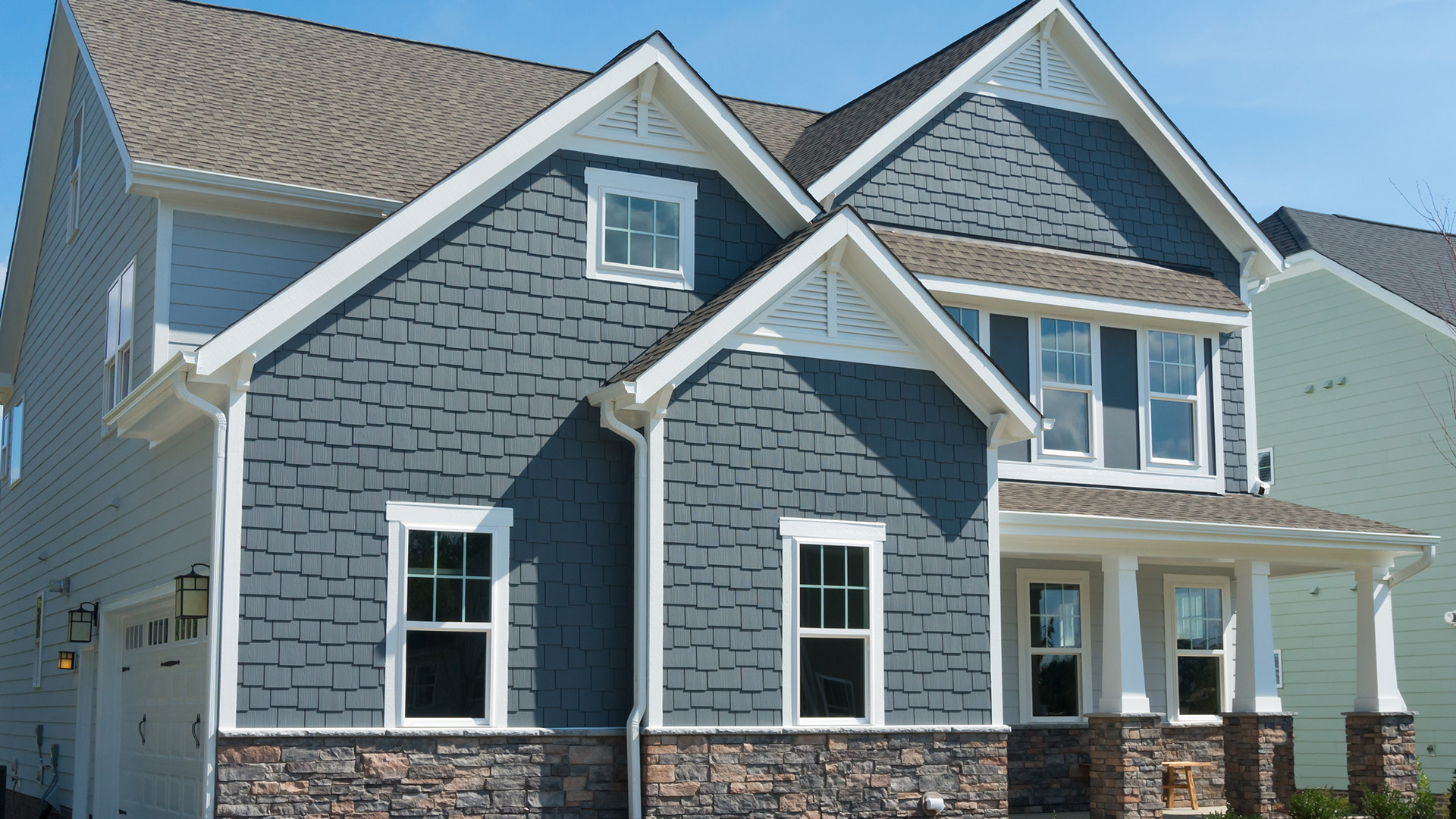
Decorative & Specialty Profiles
Most houses look standard. Beaded lap, scallops and specialty shapes add character in the right places—clean, intentional, never busy.
What This Page Covers
Most houses in Canton or Toledo look pretty much the same—standard vinyl siding running straight across every wall. But every so often you'll spot one that makes you slow down. Maybe it's got beaded shadow lines on the porch or curved scallop details in the gable.
That's what decorative and specialty vinyl siding profiles can do. They add character in the right places. Use them selectively for a clean, intentional look—not busy or overdone.
This page focuses on three main types: beaded lap for classic shadow lines, scallops (half-round) for Victorian touches, and geometric shingle shapes like octagon and half-cove for focal accents. Plus how to mix them without making your house look busy.
Looking for other siding styles & profiles beyond decorative options? We work with the full range to help you find what fits your house.
What You'll See Here
What beaded lap adds—where it works best and why
Scallops (half-round profiles)—curved edges that soften your look
Specialty shapes—octagon, half-cove patterns for gables and bump-outs
How to mix profiles—main walls vs accent areas
Colors that work—what shows detail, what washes it out
What is beaded lap siding
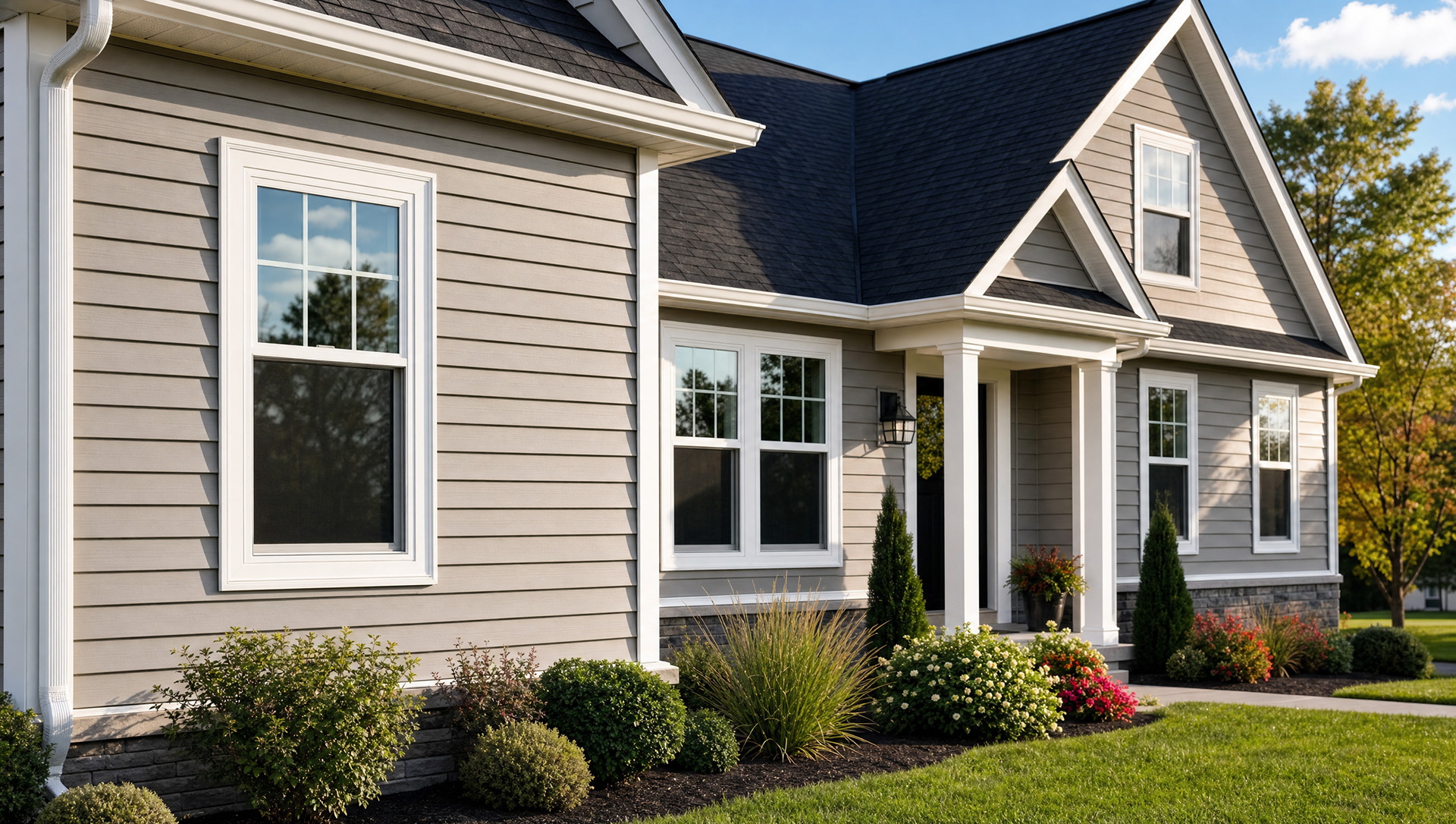
Beaded vinyl siding has a little rounded bump along the bottom of each board. That's it. But that small detail creates deeper shadows than regular lap siding.
Think regular clapboard but with more definition. Each board still overlaps the one below, water runs off fine, but you get better shadow lines that make your walls less flat-looking.
Where it works: Porches, front elevations, and symmetrical facades. Especially strong on colonial or farmhouse styles around Toledo where original wood siding had similar details.
Visual effect: A refined baseline with gentle bead shadows. Pairs well with simple trim—you're not making a bold statement, just adding subtle character.
Mix it up: Beaded lap on main walls works great with shake & shingle or scallop accents in select gables.
What are scallop siding profiles
Scallop siding has curved bottom edges instead of straight lines. Vinyl versions give you the same soft look without the upkeep.
The curves add visual movement. Each scallop creates its own shadow, and when you stack them up, you get a flowing texture that draws the eye up.
Best spots: Front-facing gables, bay windows, or entry features. Use one primary scallop field per facade to avoid too much going on.
What it pairs with: Arched windows or curved porch details. Best in mid-to-dark colors so the curves show from the street
What are specialty vinyl siding shapes
Specialty siding shapes include geometric patterns like octagon shingles and half-cove designs.
These replicate decorative cedar shingles in low-maintenance vinyl that handles Michigan and Ohio weather.
Octagon shingles create a tailored, historically inspired texture; half-cove patterns add curved indentations for dramatic shadow play. Use as single feature fields such as a front-facing gable; whole-elevation coverage can overwhelm.
Key principle: Use decorative profiles to highlight architecture that's already there rather than trying to create drama where the bones of the house don't support it.
These geometric profiles integrate cleanly with traditional horizontal lap siding or vertical board & batten below when trim lines at transitions are planned.
How to mix decorative siding profiles
Simple rule: one main profile, one accent. Main walls should look consistent; decorative shapes go on smaller, high-visibility areas.
Here's what works:
Main walls: Horizontal lap siding (traditional or Dutch) for consistency
Upper gables/dormers: Scallop, octagon, or half-cove accents
Entries/bump-outs: Vertical siding (board & batten) or beaded lap
Don't do: Multiple decorative shapes on the same wall
Transitions matter: clean trim where different profiles meet. Plan this before installation.
What colors work best with decorative siding
Color can make or break these details. Mid to dark tones show texture and shadows; light tonescan wash out detail.
For beaded and scalloped profiles: deep grays, navy blues, forest greens, or rich earth tones letshadows do their work.
Trim choices: Contrasting trim outlines shapes and makes transitions crisp. Same-color families(monochrome) create a calmer, modern look.
Local considerations: North-facing walls may need darker colors to show detail; south-facingwalls can handle lighter tones thanks to stronger shadows.
Keep it cohesive: Match sheen across different profiles so it looks like one planned project.
What Homeowners Are Saying
We had siding replaced on one of our rental properties and were impressed by how quickly and professionally it was done. Tenants are happy and the building looks great.
Online Roof Replacement
Cost Calculator
Getting the balance right with decorative details comes down to understanding what works with your specific house style and what performs well through Midwest weather. Whether you're drawn to beaded vinyl siding, scallop siding, or specialty vinyl siding shapes, we'll map decorative profiles and trim so accents feel intentional—not busy.
Our Lifetime Workmanship Warranty and Gold Standard Protection Plan ensure long-term performance. Use the calculator for preliminary costs and see financing options to make the plan workable.
Submitted Successfully!
Check your email for confirmation.
GET
STARTED
GET
STARTED