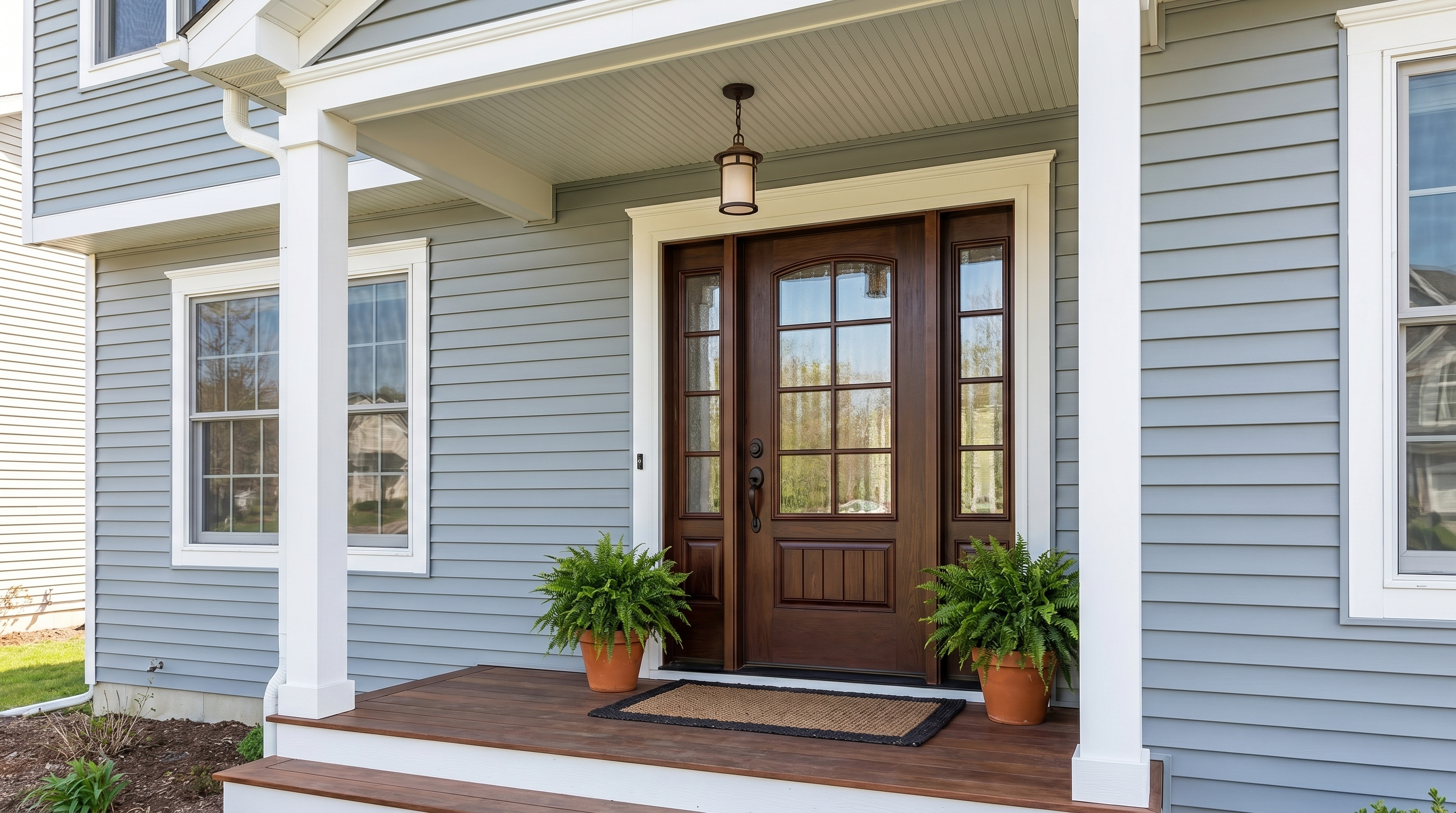
What happens during door replacement
Understanding how door replacement works makes the project predictable. You know what's happening at each step, when installers need access to your home, and what the finished result should look like.
Proper installation means the door opens and closes smoothly, weatherstripping compresses evenly, and water stays outside. When measurements are accurate and the frame is installed straight (level across the top, vertical on the sides), you avoid problems that show up later—sticking doors, drafts, or water damage.
We’ve handled door replacement for over 10,000 homeowners across our service region. Our teams bring 25+ years of experience with freeze–thaw cycles and harsh weather—conditions that test door performance. The steps stay consistent whether you're replacing an entry door, sliding patio door, or storm door; what changes is how we adapt to your home's specific conditions.
What happens, stage by stage
Have a question that's not listed? Our team is always happy to help.
Contact UsWe remove the old door slab first, then trim, then the frame and threshold. This is when we see what's really going on. Rot around the threshold is common. If the wood framing is soft or deteriorated, we replace it before the new door goes in.
We also verify rough opening dimensions one more time with the old door out. Wall settling or past repairs sometimes change the opening size slightly.
A sill pan sits at the bottom of the opening and catches any water that gets past the door, directing it back outside. We install the sill pan first, then connect it to the housewrap so water runs from the wall onto the pan and out. Jamb flashing goes on next—vertical strips along each side that lap over the sill pan. Head flashing goes across the top, lapped properly so water running down the wall doesn't sneak behind it.
Why this matters: When flashing is missing or installed backward, water gets trapped behind the frame. By the time you notice—soft spots, mold—the damage is extensive.
The new unit goes into the opening and we check three things: level (head jamb), plumb (side jambs), and square (90° corners).
We shim the frame at hinge locations, lock areas, and every 12–16 inches along the sides and top, then fasten through shims into studs. Not over-tightening prevents the frame from bowing and keeps the reveal consistent—about the thickness of a nickel—all the way around.
Once the frame is fastened, we seal the perimeter gap with low-expansion foam to avoid bowing. Weatherstripping is then adjusted for even contact on all sides. Threshold pressure is set so the door bottom presses lightly—tight enough to seal, not so tight it wears prematurely.
Air‑sealing and proper weatherstripping make a door energy‑efficient. Good glass with poor seals still leaks heat in winter and lets hot air in during summer.
It starts with an in-home consultation. We measure the existing door and opening, look at frame and threshold condition, and talk about why you're replacing the door—damage, outdated style, poor energy performance, or security concerns.
Measuring the rough opening—the actual hole in your wall where the door goes—is critical. We measure width and height at multiple points because openings aren't always perfectly square. An opening that measures 36 inches at the top might be 36 and a quarter inches at the bottom. That quarter inch matters.
We also check
- Threshold condition — solid or rotted from water exposure?
- Frame squareness — are corners at 90 degrees or shifted from settling?
- Surrounding trim and siding — how the new door integrates with existing materials
- Interior and exterior clearances — will the door swing freely?
- During this visit, we review door styles and options. For entry doors, you'll choose between steel, fiberglass, or wood. For patio doors, sliding versus French doors. Glass options range from clear to frosted to decorative patterns. Hardware finishes should coordinate with your other fixtures.
If you're in an HOA, bring those guidelines. We can help navigate approval if needed.
- What Preparation Happens Before Installation?
- Once you approve the project, we finalize measurements and create a detailed installation plan. Scheduling usually happens 2–4 weeks out, depending on door availability. Custom doors with specific glass or finishes can take longer.
Before installation day
- Clear the work area — move furniture and items within a few feet of the door
- Protect valuables — wall hangings near the door should come down temporarily
- Plan for access — secure pets in another area; installers move in and out frequently
- Disable door alarms — sensors get removed and reinstalled on the new door
- We protect your floors with drop cloths and lay tarps outside for debris.
- Tighten hinge screws; confirm swing is smooth
- Install deadbolt and lockset; align strike plate; test engagement
- Adjust storm door closer if applicable
Sliding patio doors
- Adjust roller height so the door glides smoothly
- Verify latch and lock engagement
French doors
- Adjust the center seal where doors meet
- Tune multi‑point locks at top, middle, and bottom
We test everything multiple times—open, close, lock, unlock—and adjust on the spot.
Trim, finish & cleanup
Interior casing covers the gap between frame and drywall; exterior casing covers the gap to siding or brick. Pre‑finished doors install quickly; primed units may be painted or stained. Caulking happens last at casing-to-siding seams, threshold-to-subfloor, and other joints.
All debris is removed and the work area is cleaned before the final review.
Have a question that's not listed? Our team is always happy to help.
Contact UsWhat happens after door installation?
The final walk‑through is your review time. We demonstrate operation, show how the lock works, and point out maintenance items.
Basic maintenance
- Clean tracks and weatherstripping a few times a year; replace cracked strips
- Lubricate hinges (silicone spray or light oil) annually
- Check threshold and sweep; replace when you see light under the door
- Expect minor settling; call if adjustments are needed
- You'll receive warranty documentation before we leave. The door has a manufacturer warranty, and our Lifetime Workmanship Warranty covers installation issues for as long as you own the home. Our Gold Standard Protection Plan includes annual inspections, priority scheduling, and transferability.
- What Do the Performance Numbers Mean?
- Every new door has an NFRC (National Fenestration Rating Council) label—like a nutrition label for performance. Key fields:
Basic maintenance
- U‑factor — insulation rating (lower is better)
- SHGC — solar heat gain (lower reduces cooling load)
- VT — visible light (higher means more daylight)
- AL — air leakage (lower is tighter)
- How Long Does Door Replacement Take?
- Most entry door replacements take one day. Larger projects—wide patio doors or framing repairs—can take two days. Storm door installation is faster, typically 2–3 hours.
What affects timeline
- Door type and size
- Frame condition (rot or structural issues)
- Trim and finish work (custom millwork, stain/paint)
- Weather delays for exterior work
Gold Standard
Every Project Protected for Life
Every Integrity project includes free annual inspections and lifetime workmanship coverage to ensure your home stays protected year after year. No enrollment, no additional fees, just our promise of Gold Standard quality.
See What's IncludedWhat Homeowners Are Saying
Ready to start your door replacement?
Schedule a free consultation. We'll measure your opening, discuss your goals, and provide a detailed proposal the same day. Our door installation process is backed by warranties that protect your investment for the life of your home. Over 10,000 homeowners have trusted us with their exterior projects.