|
24 Months
No Payment
|
No Interest
|
24 Months
No Payment
|
No Interest
|
24 Months
No Payment
|
No Interest
|
24 Months
No Payment
|
No Interest
Hopper Windows
Tilts inward for fresh air in tight spaces. Easy to operate, space-saving design, and low-maintenance vinyl construction.
OVERVIEW / WHAT THIS PAGE COVERS
A hopper window is hinged at the bottom and tilts inward from the top. You'll see them most often in basements, bathrooms, and other compact spaces where you need ventilation but don't have room for a window that swings outward.
The way it works is straightforward: unlatch it from inside, the top tilts toward you to create an opening for airflow, and when finished you push it back up and latch it closed. Nothing projects outside the wall opening.
Hopper windows solve specific problems most other window styles can't: narrow exterior walkways, deck railings right outside, window wells—places where a casement or awning would swing into something. Because everything happens on the inside, they also remain easy to operate when the window sits high on a wall, common in basements where you want privacy but still need fresh air.
Here's what you'll learn:
What hopper windows are and how the bottom-hinge, inward-tilt design provides ventilation without exterior clearance
Where hoppers work best room-by-room—basements, bathrooms, laundry rooms, and other tight spots
How hopper windows compare to awning, casement, and slider styles for ventilation, operation, and space needs
Comfort features available—glass options, coatings, and gas fills that steady indoor temperatures
How to operate and care for them—simple maintenance that keeps hopper windows working smoothly
Egress basics—what building codes require for finished sleeping areas and why small hoppers usually don't qualify
WHAT IS A HOPPER WINDOW?
A hopper window is hinged at the bottom and tilts inward from the top—think of opening a mailbox lid in reverse. The design is compact; no exterior swing or crank is needed so all movement stays within the room.
That inward tilt gives controlled ventilation. The opening is at the top, so cooler air enters without a direct floor‑level draft. In basements, it helps exchange stale air; in bathrooms, it clears steam and humidity. You can crack it slightly for airflow, then latch it closed when you’re done.
Custom‑made vinyl hopper windows are built for moisture‑heavy spots and seasonal temperature swings: no rot, no paint, stable frames, and durable latches and hinges.

WHERE DO HOPPER WINDOWS WORK BEST?
Basements
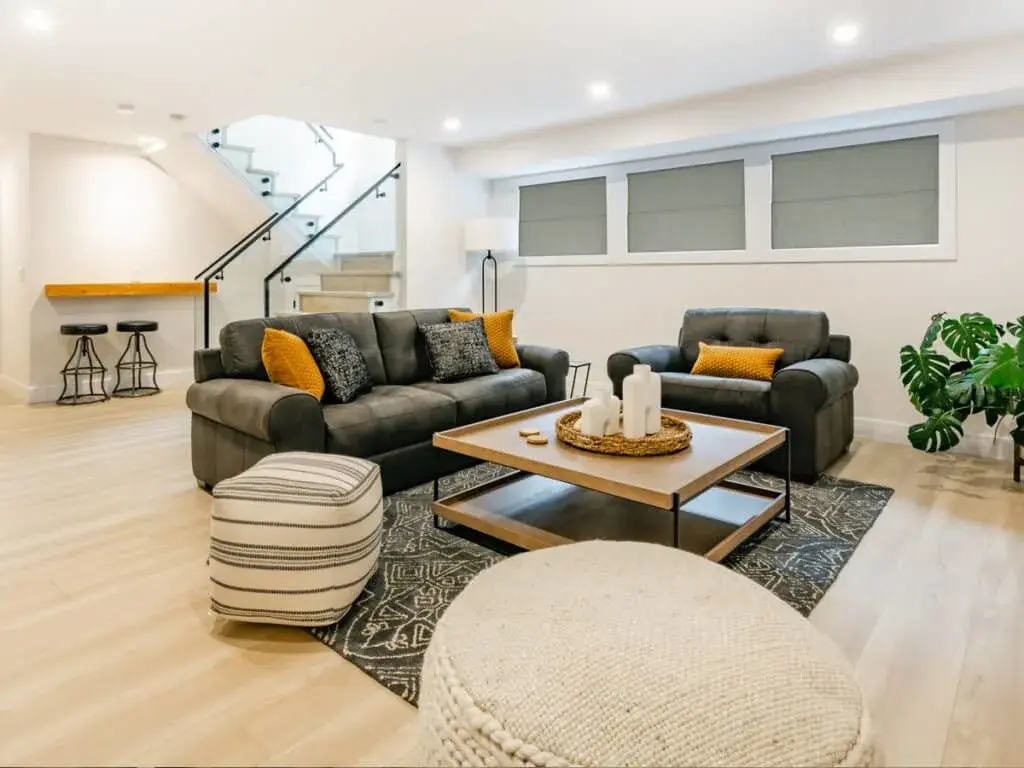
Basement windows sit high on the wall on the interior and near grade outside. Hoppers fit this layout: easy to reach and unlatch, no exterior swing to hit wells or landscaping, and effective at moving stale air out while bringing fresh air in.
Bathrooms & Laundry Rooms
Mount them higher for privacy yet still get ventilation. The inward tilt is simple to operate in tight rooms without reaching around vanities or appliances. Warm, moist air clears quickly after showers or laundry cycles.
Tight Exterior Clearances
Choose hoppers when there’s no room for a sash to swing outward—narrow side yards, decks close to the wall, or walkways. The window opens inward so nothing obstructs exterior paths.
When Another Style Might Be Better
Light rain ventilation: Top‑hinged awning windows swing outward and shed water away from the opening; hoppers can allow rain in if left open during storms.
Maximum airflow from one opening: Casements swing fully open and generally move more air; hoppers provide good but not maximum ventilation.
Code egress for sleeping areas: Small hoppers typically do not meet emergency escape and rescue opening size rules; verify local code if a room will be a bedroom.
HOW DO HOPPER WINDOWS COMPARE?
| Hopper vs Awning | ||
|---|---|---|
| Feature | Hopper | Awning |
| Hinge location | Bottom (tilts inward) | Top (swings outward) |
| Rain protection when open | Can allow rain in | Sheds rain outward like a small roof |
| Exterior clearance | None needed | Needs exterior space to swing |
| Best for | Basements, tight spaces, baths | Kitchens, living areas, rooms used in light rain |
| Hopper vs Casement | ||
|---|---|---|
| Feature | Hopper | Casement |
| Opening style | Tilts inward | Swings outward fully |
| Ventilation | Good airflow | Maximum airflow from one unit |
| Seal when closed | Compression latch; decent seal | Tight compression seal |
| Exterior clearance | Not required | Required |
| Best for | Basements, baths, narrow spaces | Kitchens, bedrooms, cross-ventilation |
| Hopper vs Slider | ||
|---|---|---|
| Feature | Hopper | Slider |
| Operation | Tilts inward | Slides horizontally |
| Opening shape | Fits narrow/short openings | Best for wide openings |
| Interior/exterior projection | Projects into room | Stays within frame |
| Best for | High basement windows, small baths | Wide walls, mobility access |
DO HOPPER WINDOWS MEET EGRESS REQUIREMENTS?
If you’re finishing a basement or converting a room into a bedroom, building codes require an emergency escape and rescue opening (egress). Casement and slider windows commonly meet the required clear opening; small hoppers usually don’t due to their opening angle and size. Always check local code if the space will be used for sleeping.
COMFORT FEATURES
Hopper windows can include the same performance options available across our vinyl line.
These features help steady indoor temperatures, reduce heat transfer, and limit edge‑of‑glass condensation:
Two or three panes: extra glass layers create insulating air spaces for better comfort.
Low‑E glass: a thin, nearly invisible coating that reflects heat—helps keep heat outside in summer and inside in winter without dimming daylight.
Argon or krypton gas between panes: denser than air to slow heat transfer; argon is common, krypton is a premium option.
Warm‑edge spacers: improved spacer materials that reduce heat loss at glass edges and help limit condensation.
Every window includes performance data so you can compare options during your estimate.
OPERATE & CARE
Using the Latch and Handle
Unlatch at the top and pull the sash toward you; it tilts inward on bottom hinges.
To close, push the sash up until it meets the frame and latch securely.
Avoid leaving hoppers open during heavy rain or storms.
Keep Seals and Surfaces Clean
Wipe sill and frame with a damp cloth a few times a year; use a soft brush for corners.
Inspect weatherstripping yearly; replace if cracked or loose—most press into a channel.
Lubricate hinges annually with silicone‑based spray; avoid oil‑based products.
FINANCING + NEXT STEPS
Ready to add hopper windows to tight spaces? We’ll measure, review glass options, and provide a clear estimate. Flexible payment plans are available; most approvals happen within 24 hours. Installations are backed by our Lifetime Workmanship Warranty and Gold Standard Protection Plan.
Our Hopper Window Projects
TESTIMONIALS
Ready to Get Started?
Hopper windows make sense in basements, bathrooms, and anywhere you need easy operation, a space‑saving design, and ventilation without exterior clearance. The inward tilt provides airflow when you need it; the latch creates a solid seal when closed; vinyl construction keeps maintenance low.
Submitted Successfully!
Check your email for confirmation.
GET
STARTED
GET
STARTED
Leading exterior home remodeling experts serving Ohio and Michigan with quality craftsmanship since 2000.
Toledo
(419) 495-8598
2852 South Ave Toledo, OH 43609
Farmington Hills
23941 Research Dr Farmington Hills, MI 48335
(248) 290-6843
Integrity Home Exteriors © 2025 All rights reserved. Sitemap